
The Club organised a guided tour of the Ajuda Palace – ‘Daily Life at the Royal Table’ – where we saw, for the first time, how the meals of King Luís I and Queen Maria Pia and their closest circle were organised, in a tour evoking the long-inaccessible service areas, such as the kitchens, pantry, storerooms and larder, on a route linking the Dining Room – where the exquisite original furnishings have been recreated – to the Dishwashing Room.
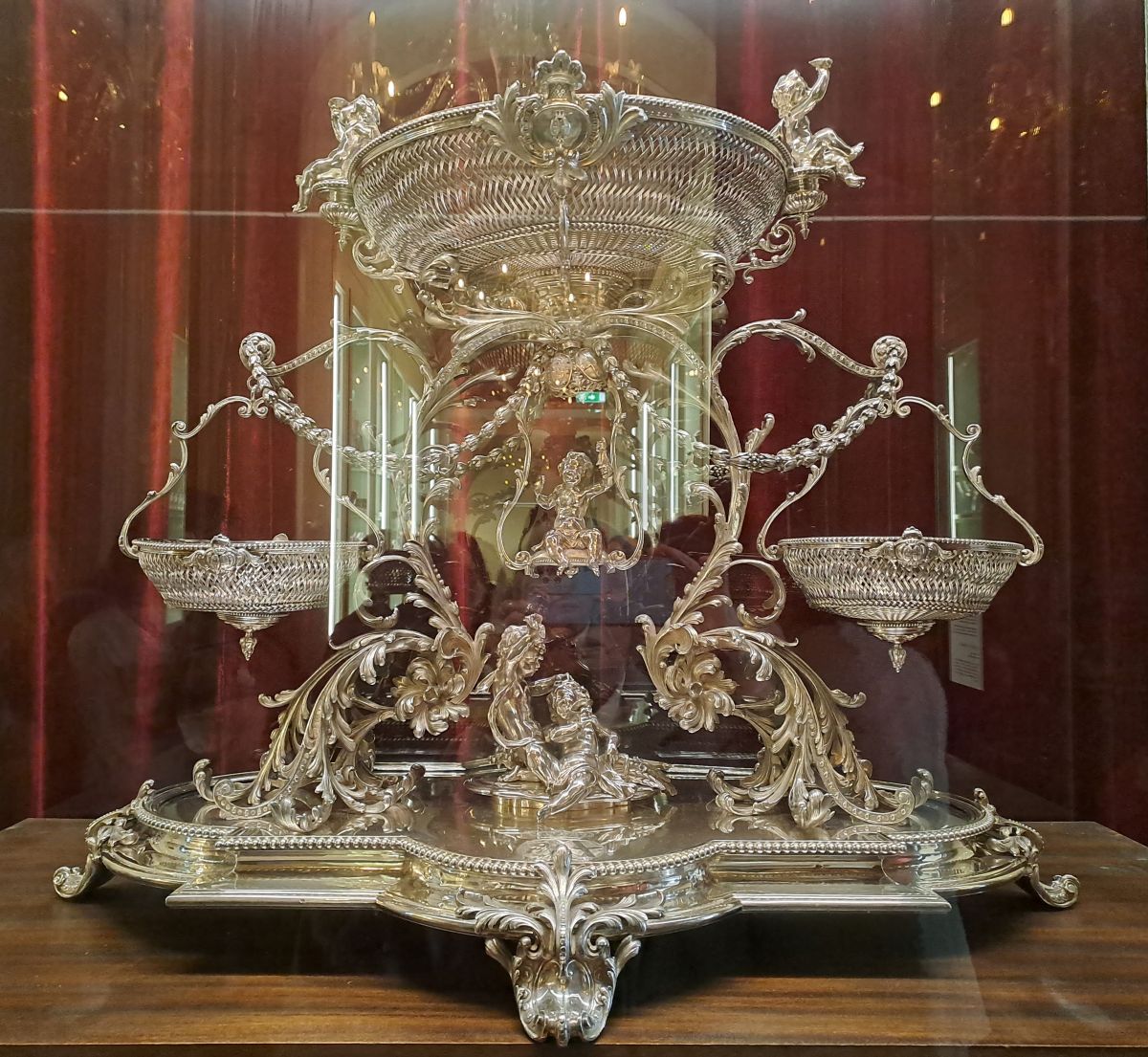
The silver tableware from the Veyrat workshop, known as the ‘wedding silver’, which today comprises two hundred and sixty-one pieces, is believed to have been brought from Italy by Queen Maria Pia on the occasion of her marriage to King Luís I in 1862. The centrepiece of this set, handed over by the Queen herself to the Bank of Portugal in the early 20th century as security for bank loans she had taken out, was sold at the famous auction of the Jewels and Silverware that belonged to the late Queen Maria Pia in 1912, by which time the Republic was already in full swing. Its whereabouts remained unknown until December 2014, when it reappeared on the antiques market and was acquired by the Directorate-General for Cultural Heritage.
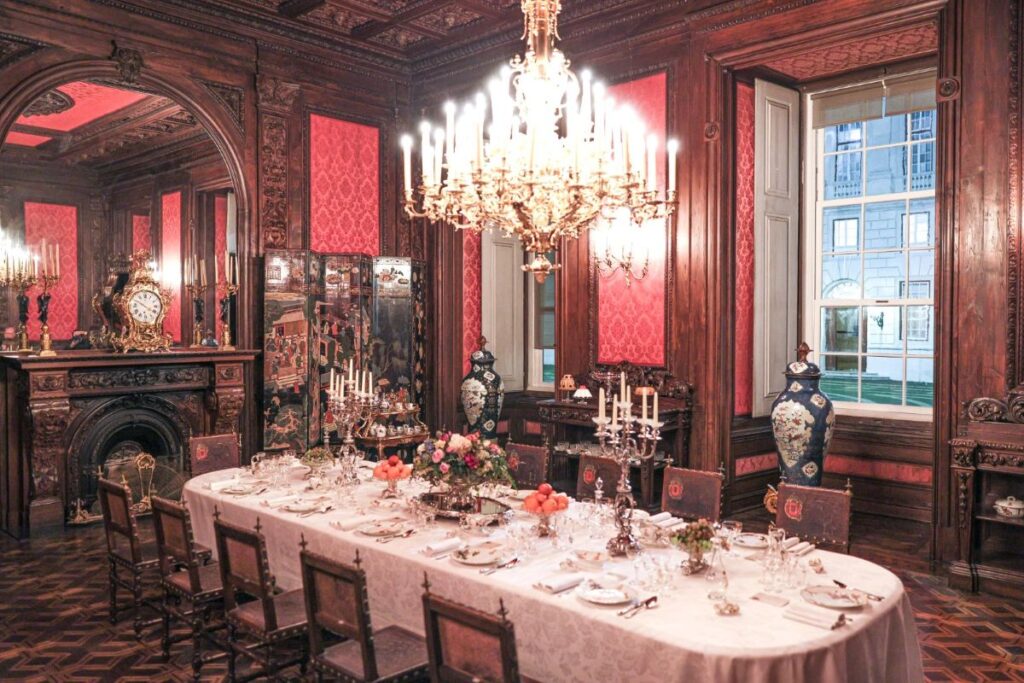
This room, designed by Leandro Braga as early as the 1880s, features Neo-Renaissance décor, and its chestnut wood panelling incorporates fragments of carved woodwork from the 16th and 17th centuries.
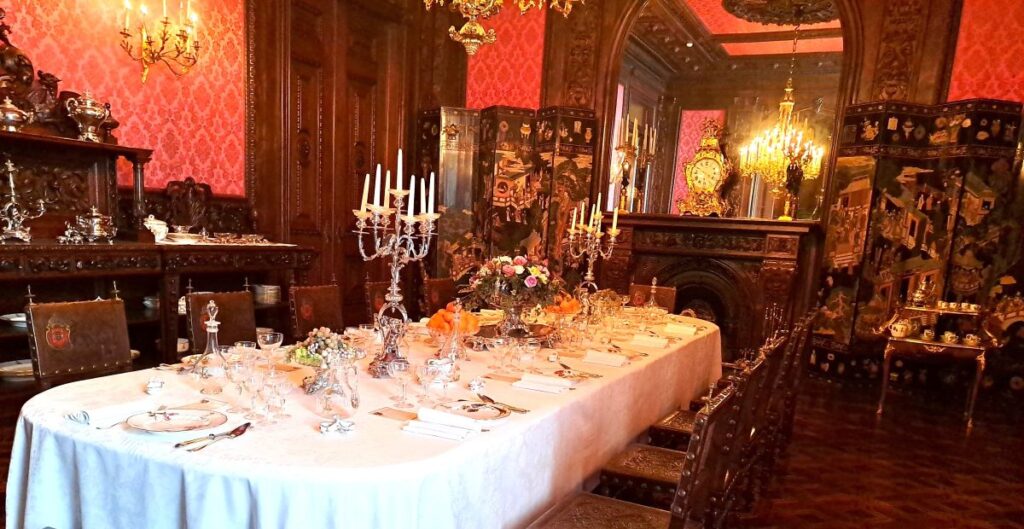
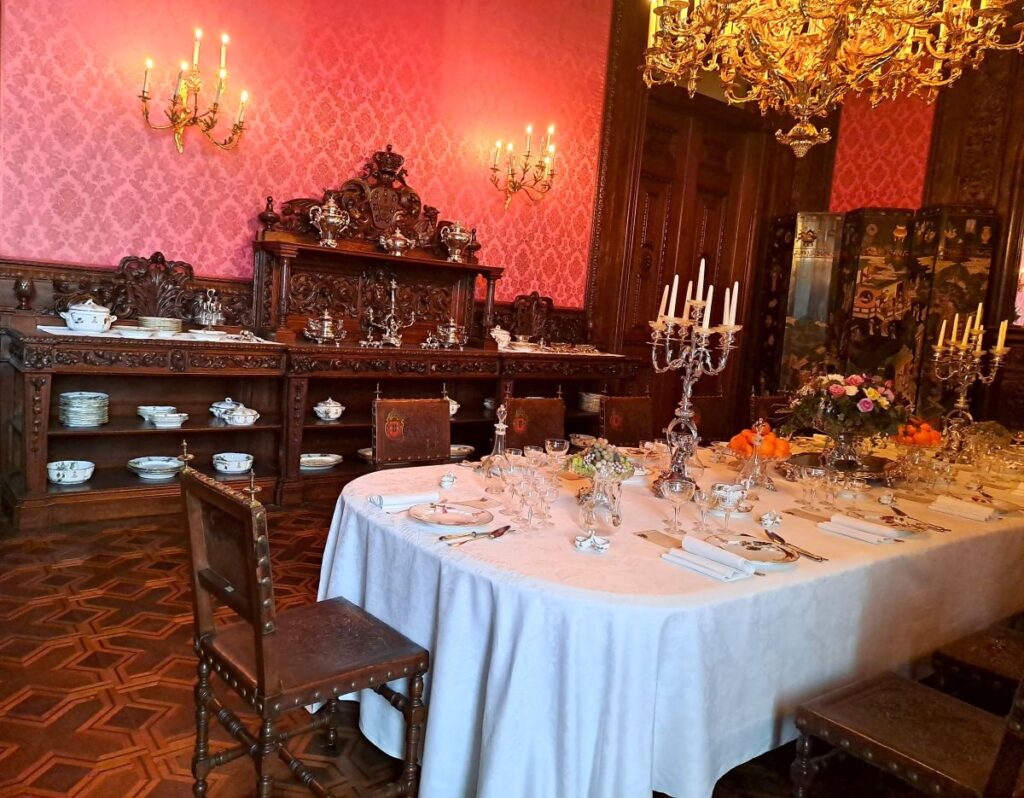
Every day, the following would take their seats at the State Table: the king, the queen, Prince Afonso, the dignitaries on duty and, on occasion, guests. From the second half of the 19th century onwards, the Russian-style service was introduced at court, replacing the French-style service that had previously been in use.
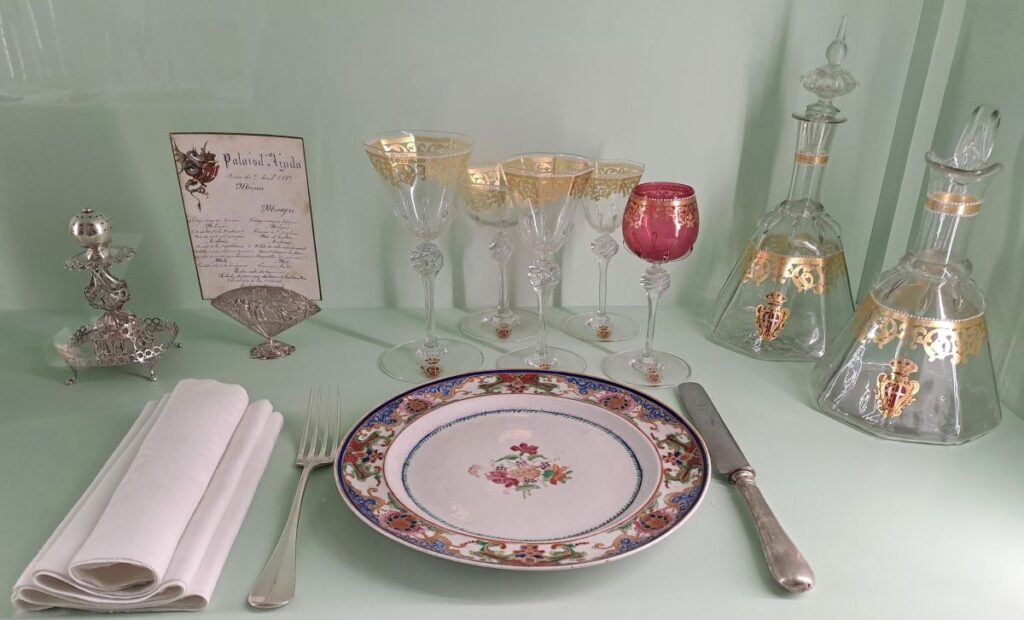
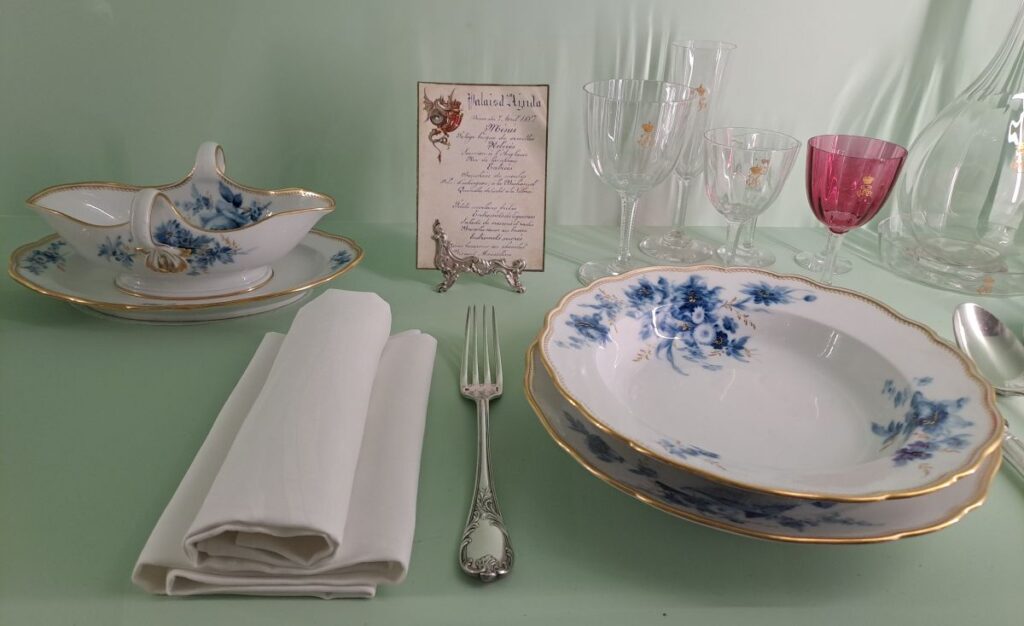
Some of the tableware and table linen used, as well as deliveries to other palaces, were monitored on a daily basis by the Steward and the Storekeeper – positions held by António Duarte and Narcizo António de Souza for many years.
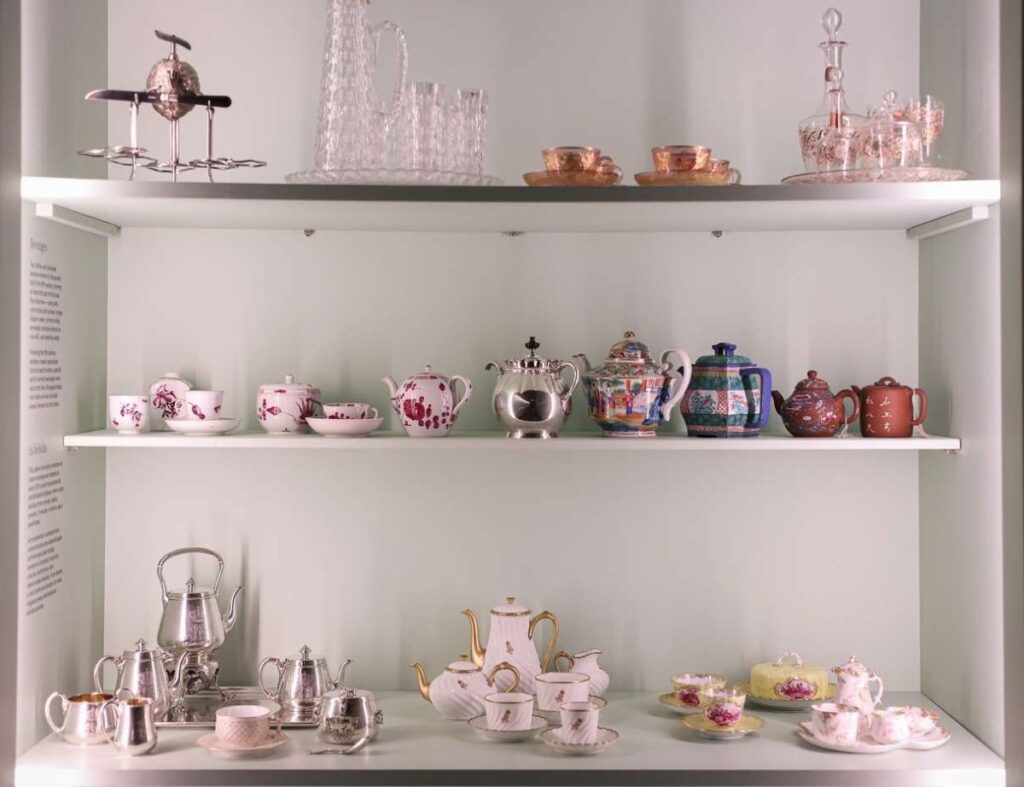
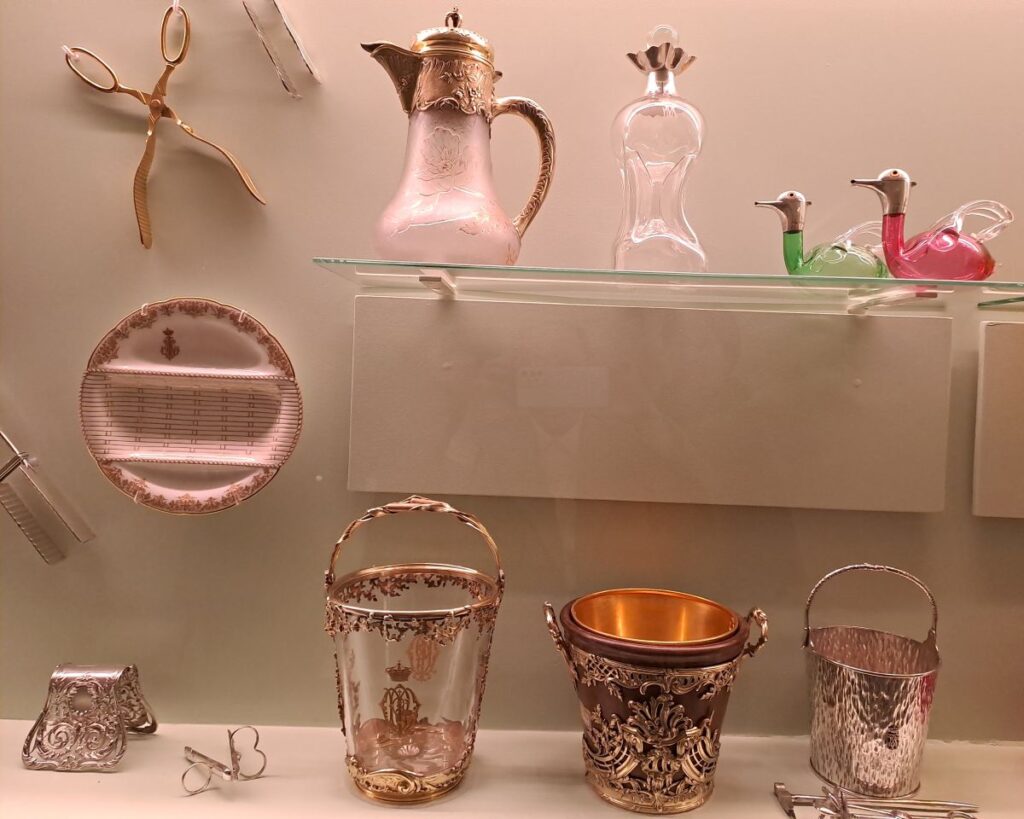
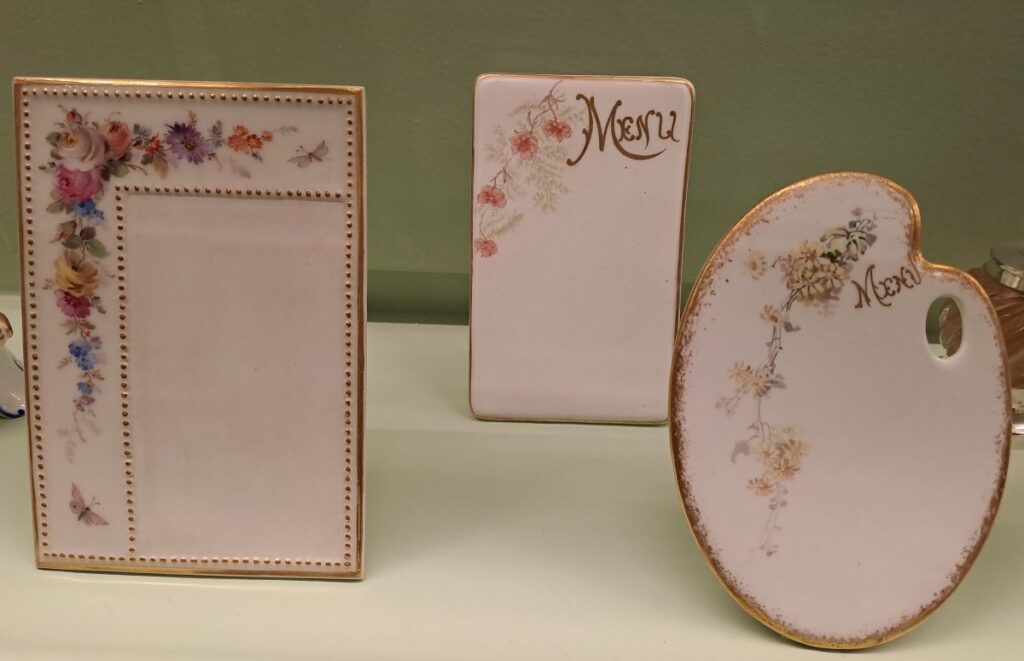
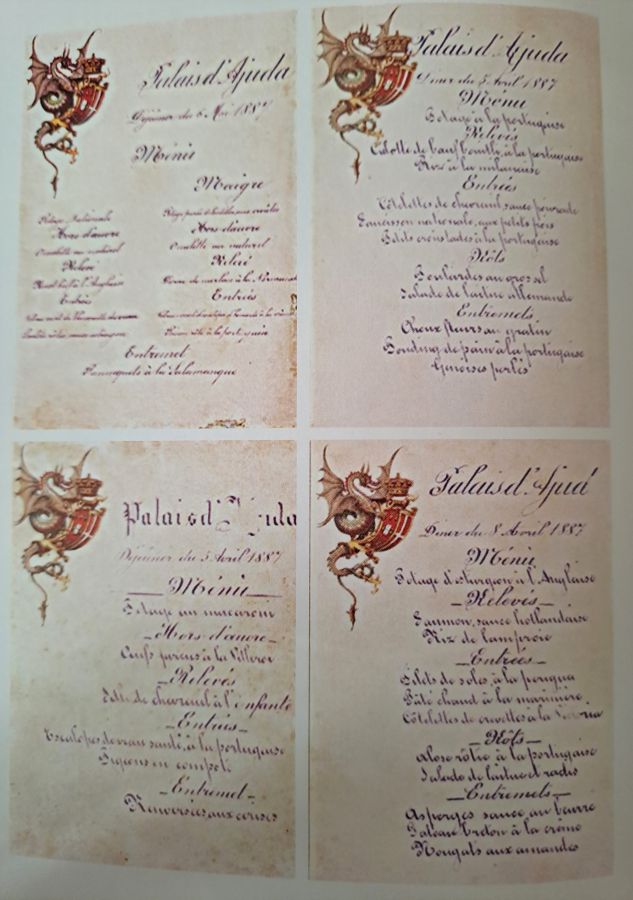
With Russian-style service, menus become indispensable. Handwritten in French, the menu is usually framed by a drawing or watercolour, offering an insight into the royal family’s dining habits and revealing not only the dishes but also the order in which they were served.
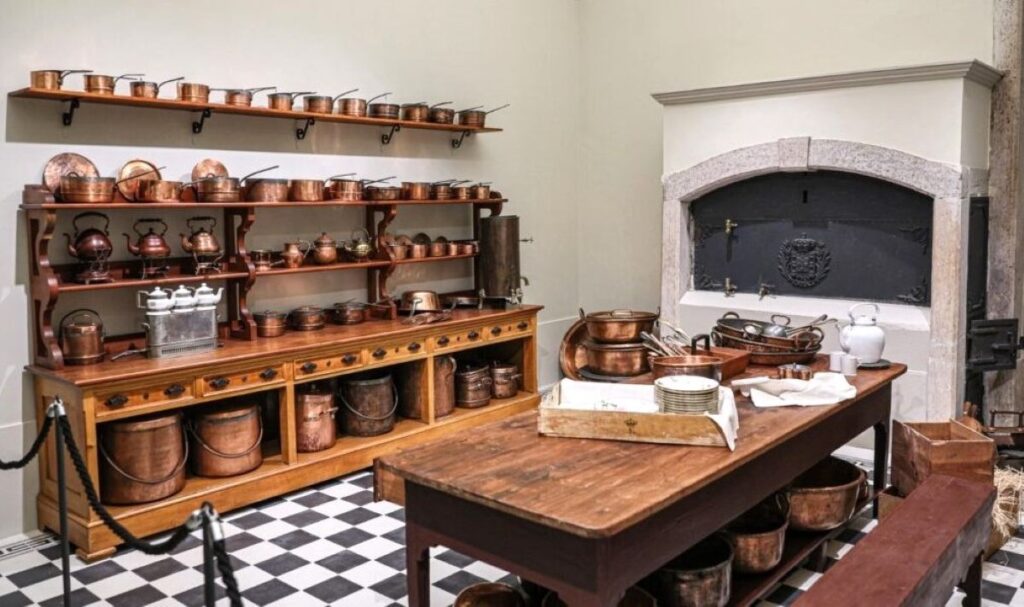
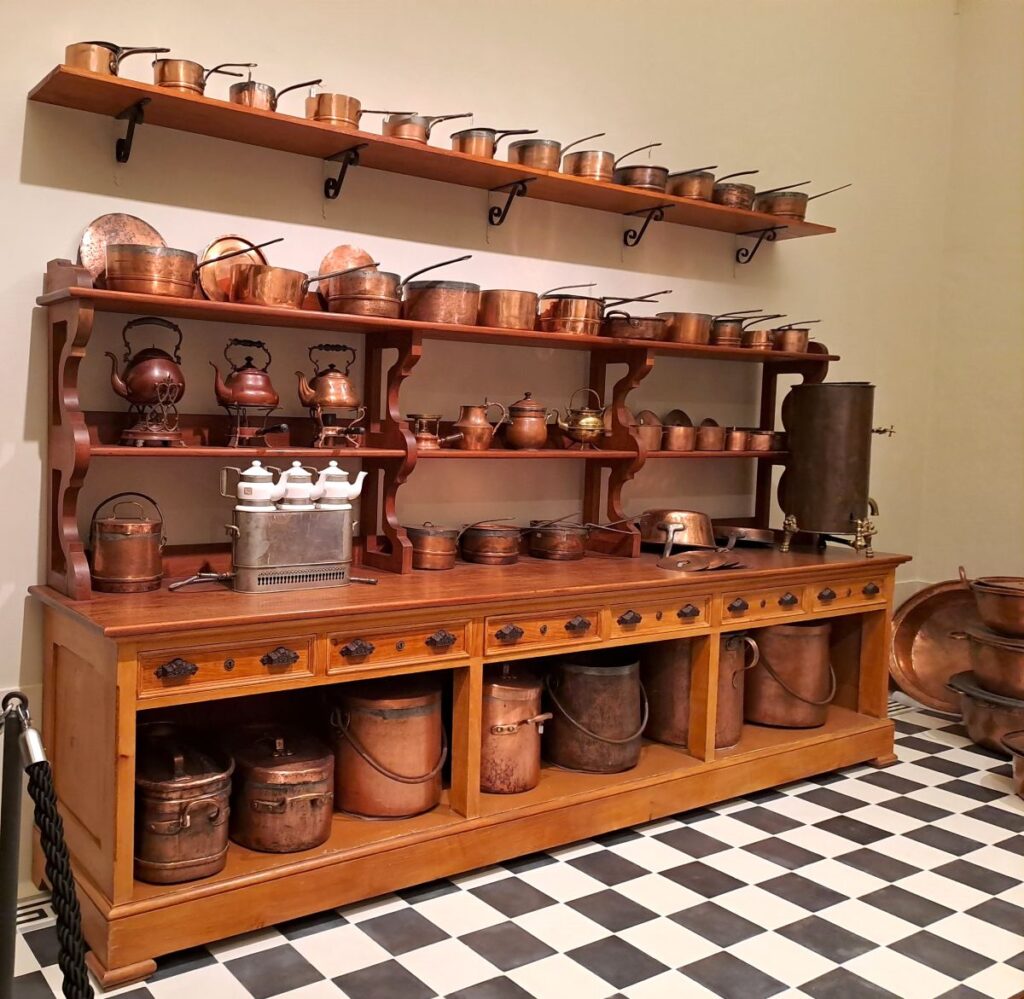
The copper and brass cookware, kitchen utensils, baking and confectionery equipment, and pantry items are important material evidence of nineteenth-century cuisine. They reflect the daily routine of table service and the practices of the Royal Household. At the time, the kitchens were located in the north wing of the palace.
This is where the large Washing Room was located. After every meal, the tableware taken to the State Dining Room was brought here to be washed, counted and put away. This was a place where great attention and care were taken, and where items in poor condition or unsuitable for further use were recorded.
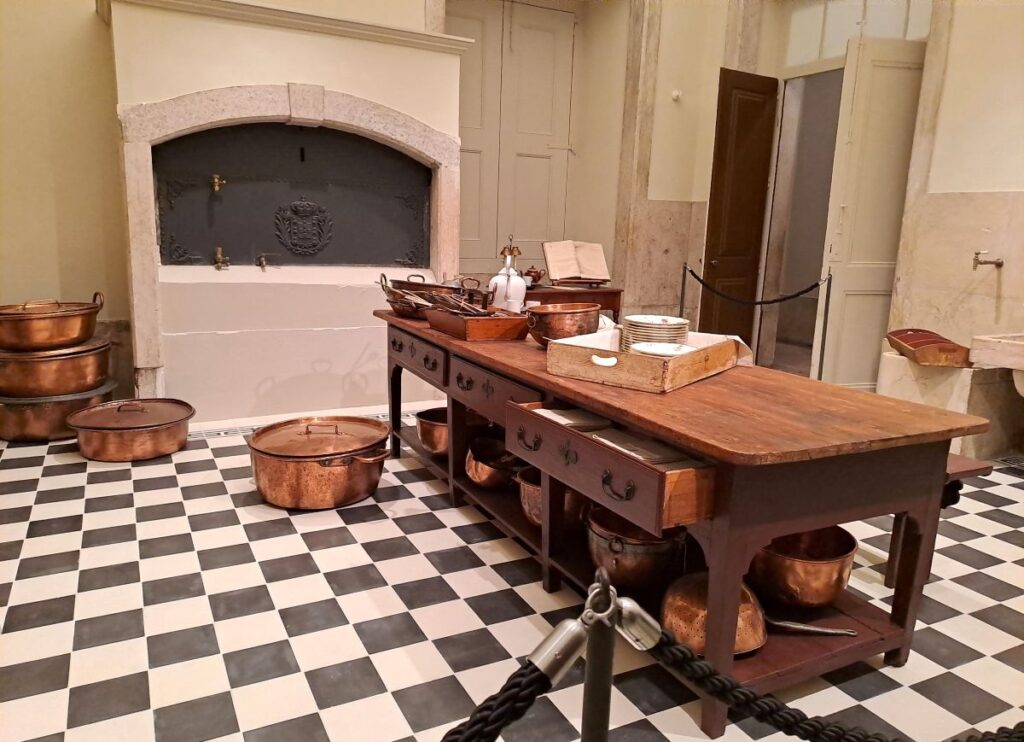
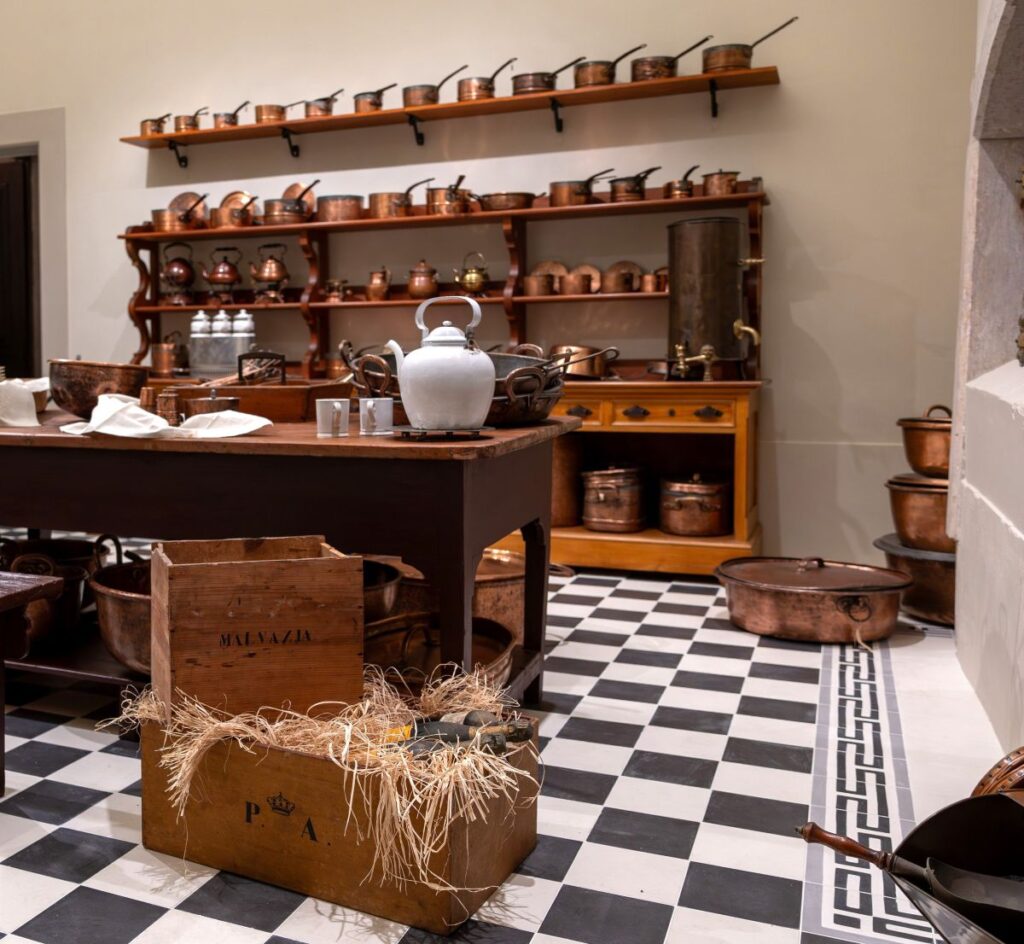
The ceremonies held in other palaces involved the movement of hundreds of items of tableware, textiles and crockery. The packing (into the large wooden crates visible in the photo) and dispatch were the responsibility of the teams working under the State Banquet Master, particularly the Crate Handlers.
The Queen Maria Pia enjoyed al fresco meals, in the countryside or on the beach, in the company of friends. The staff would carry the picnic equipment – folding tables and chairs and tents – to the woods of Penha Longa, Adraga beach or the countryside, always with comfort and etiquette. In rugged, sometimes isolated places, amidst the mist or on the sand, everything was strictly controlled – the butler ensured that nothing was left behind.