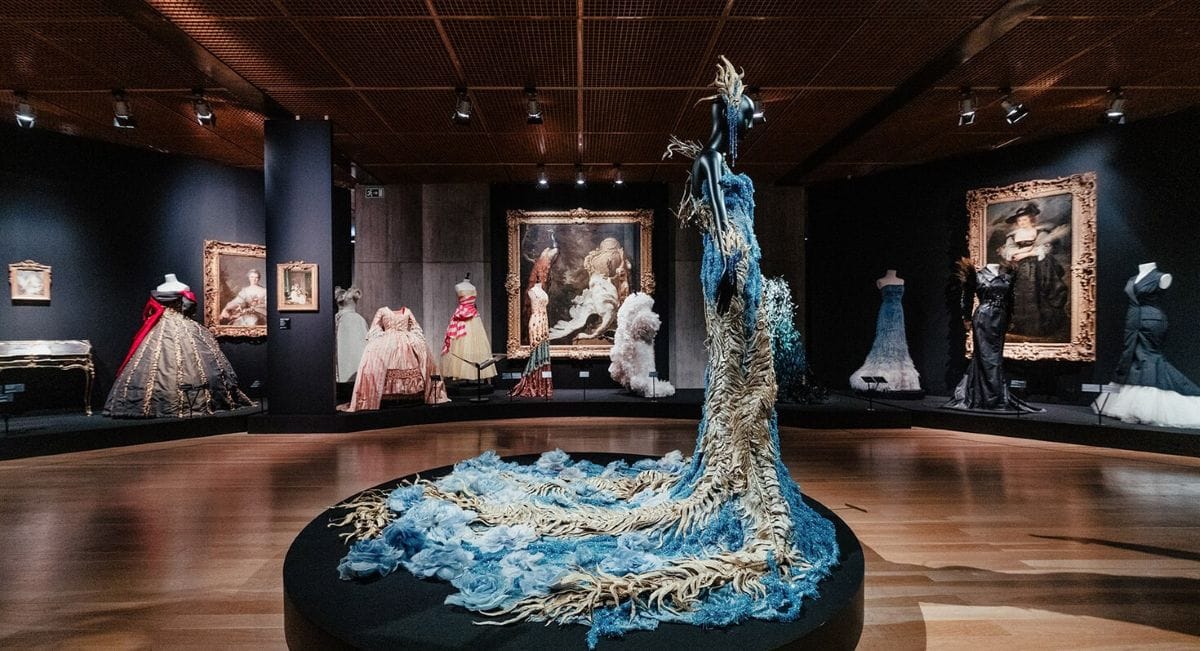
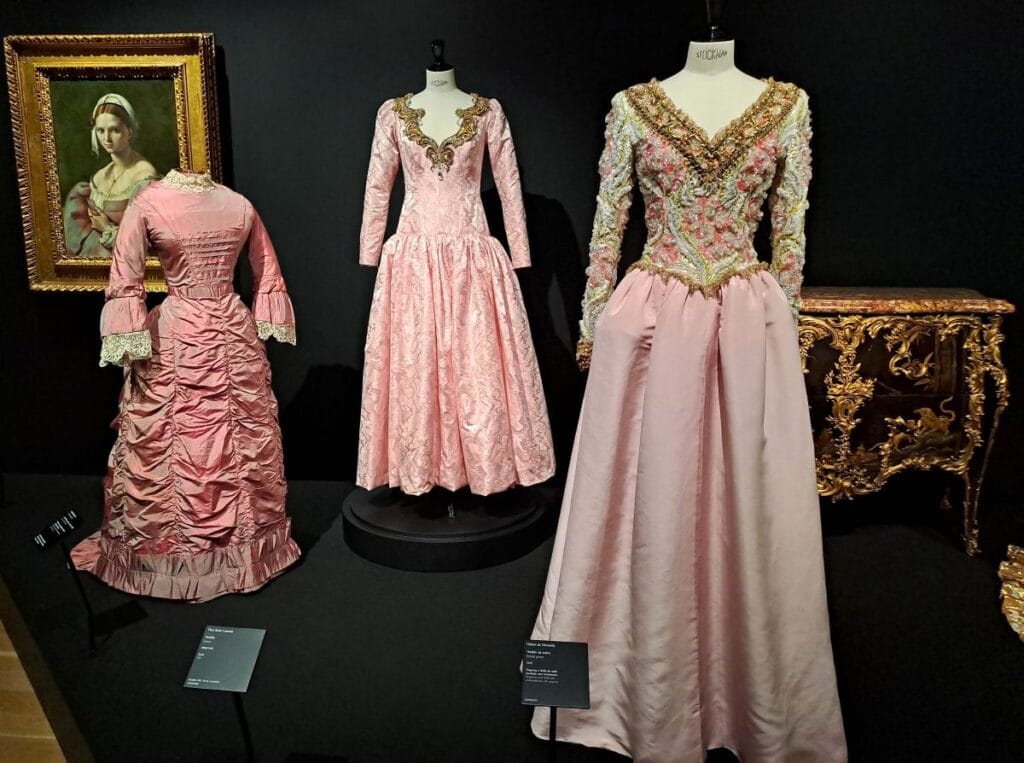
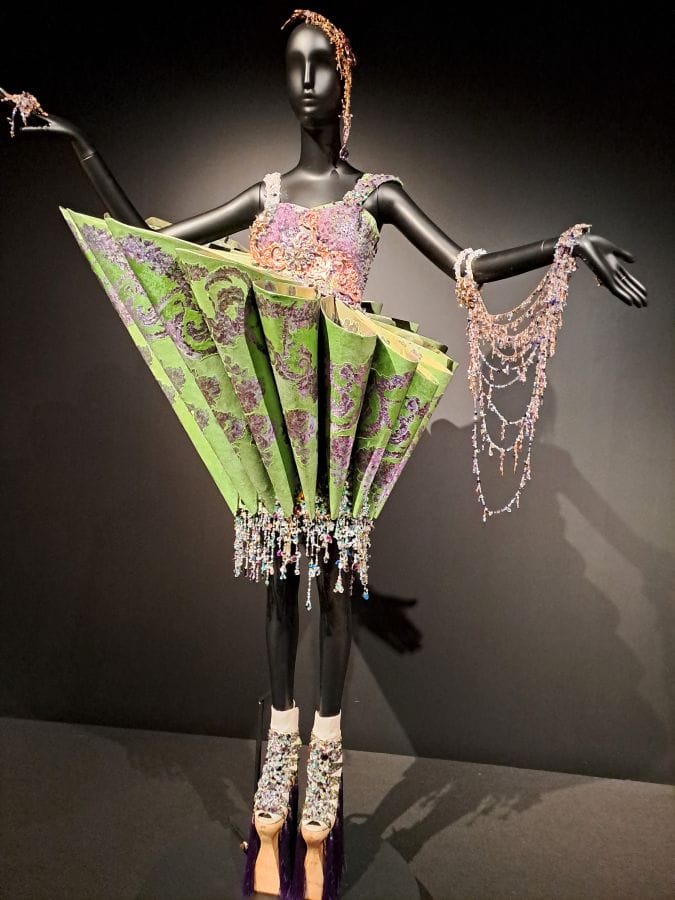
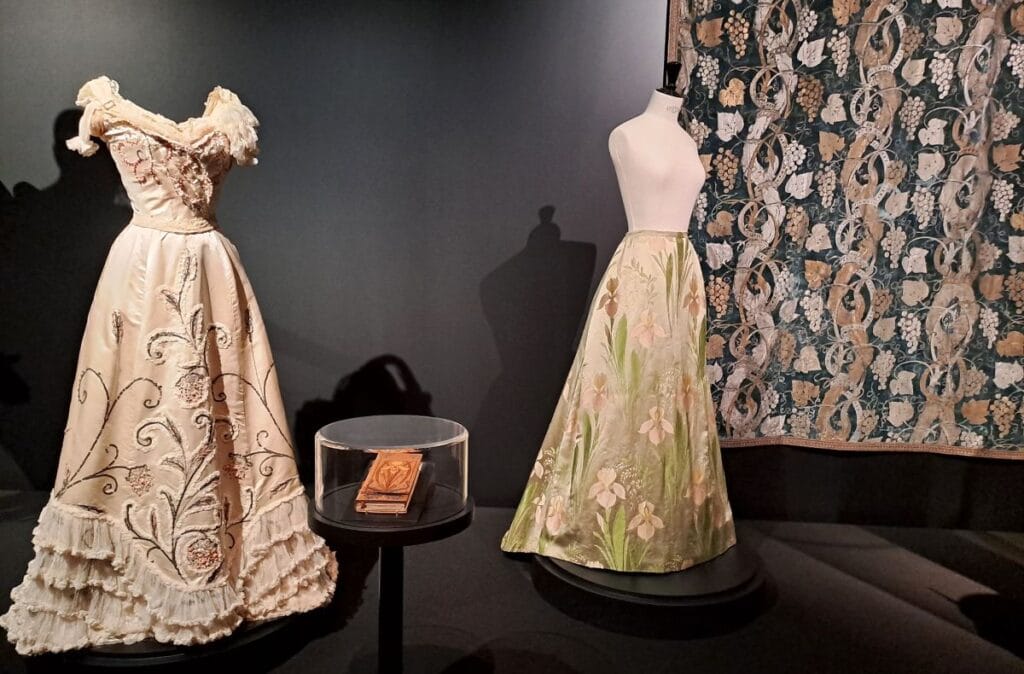
On 15 June, the Club organised a guided tour of the ‘Art & Fashion’ exhibition. An exhibition in which 100 works of art from the Gulbenkian Collection (ranging from Ancient Egypt and Japan to Chinese porcelain and paintings by Rembrandt, Rubens, Monet, Degas and Carpaccio, amongst others) intersect and dialogue with 140 haute couture fashion creations by leading international designers such as Guo Pei, Dior, Balenciaga, Yves Saint Laurent, Versace, Jean-Paul Gaultier, Vivienne Westwood, Alexander McQueen, Hubert de Givenchy and Portuguese designers – Nuno Baltazar, José António Tenente, Maria Gambina, Miguel Vieira and Nuno Gama.
Some of the pieces on display by the renowned Chinese fashion designer Gou Pei are being shown in Europe for the first time.
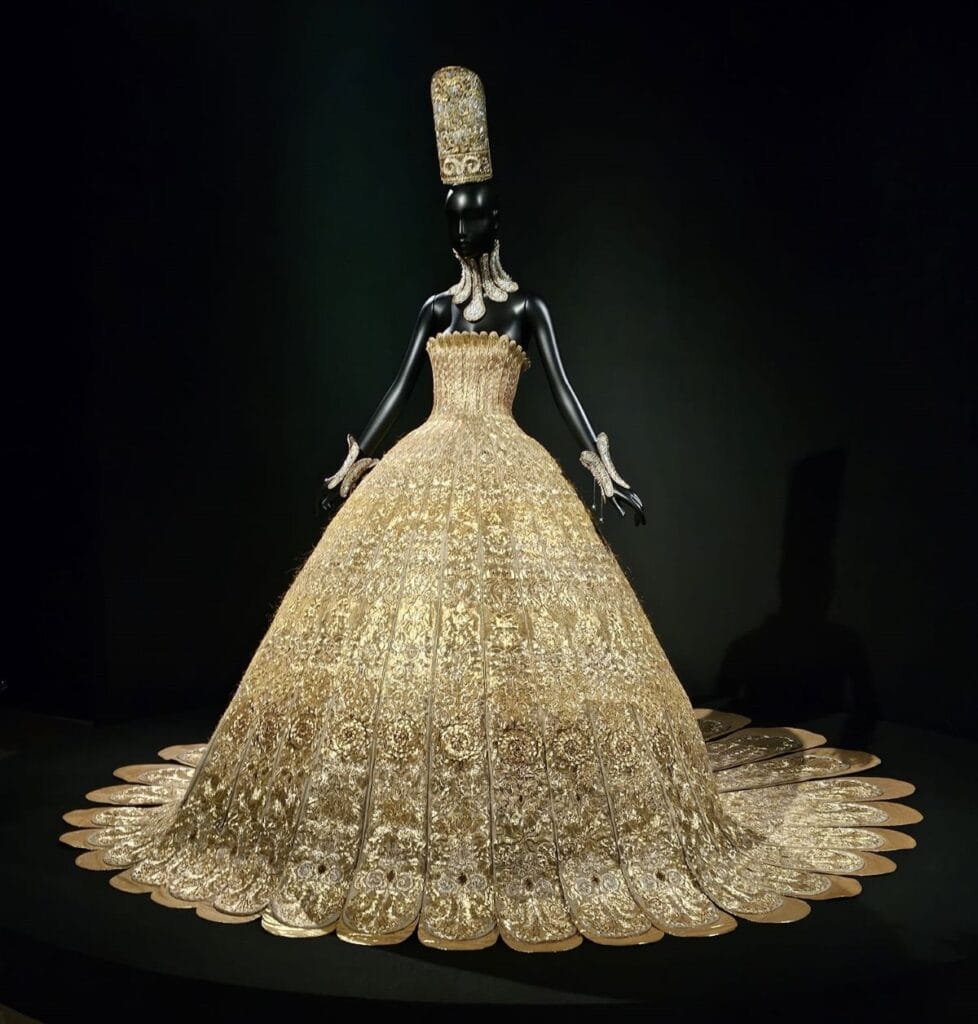
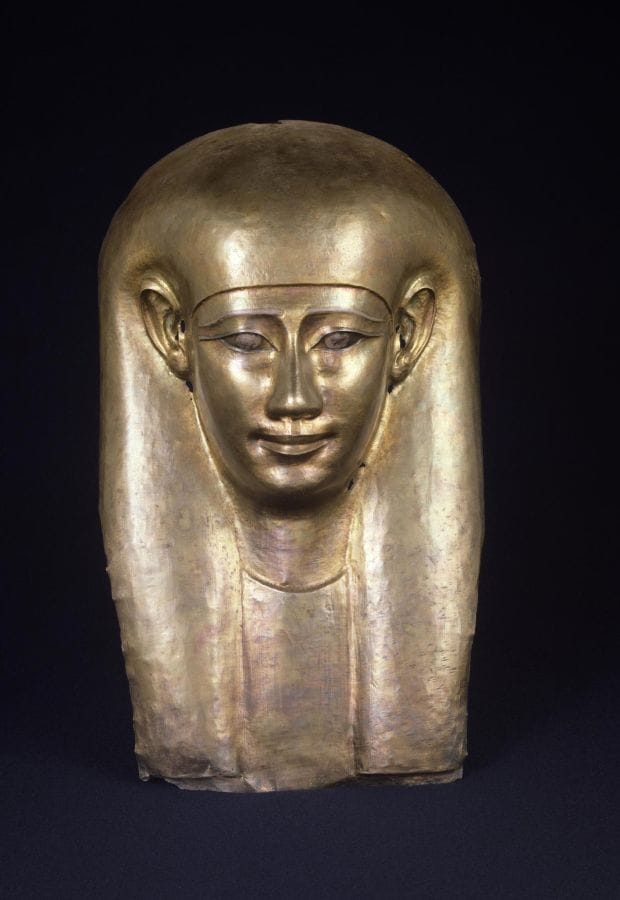
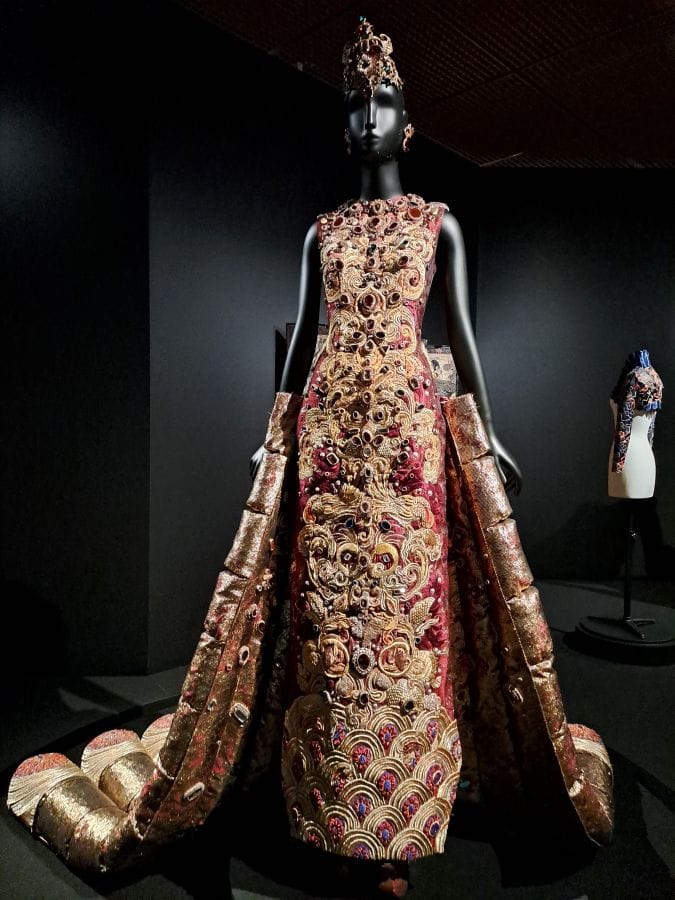
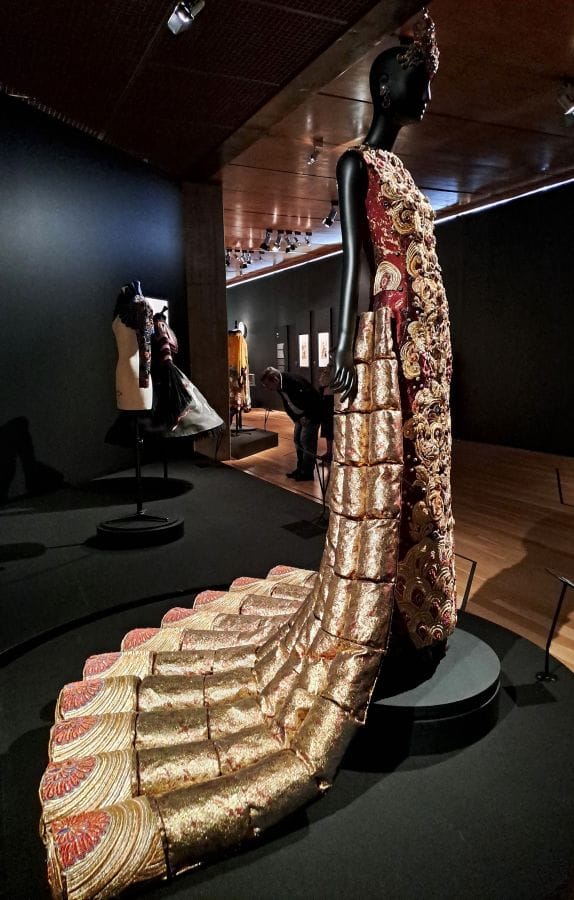
We began the tour with Gou Pei’s piece ‘Magnificent Gold’, a profusion of gold set against a funerary mask from Ancient Egypt.
Magnificent Gold by Gou PeiAn Ancient Egyptian mask in silver and gold
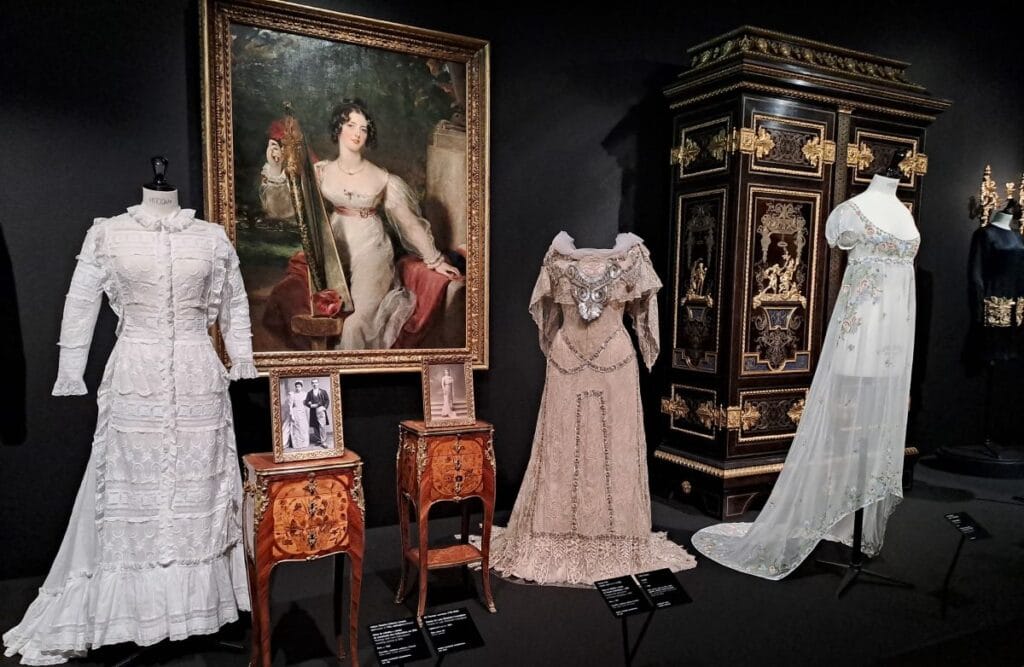
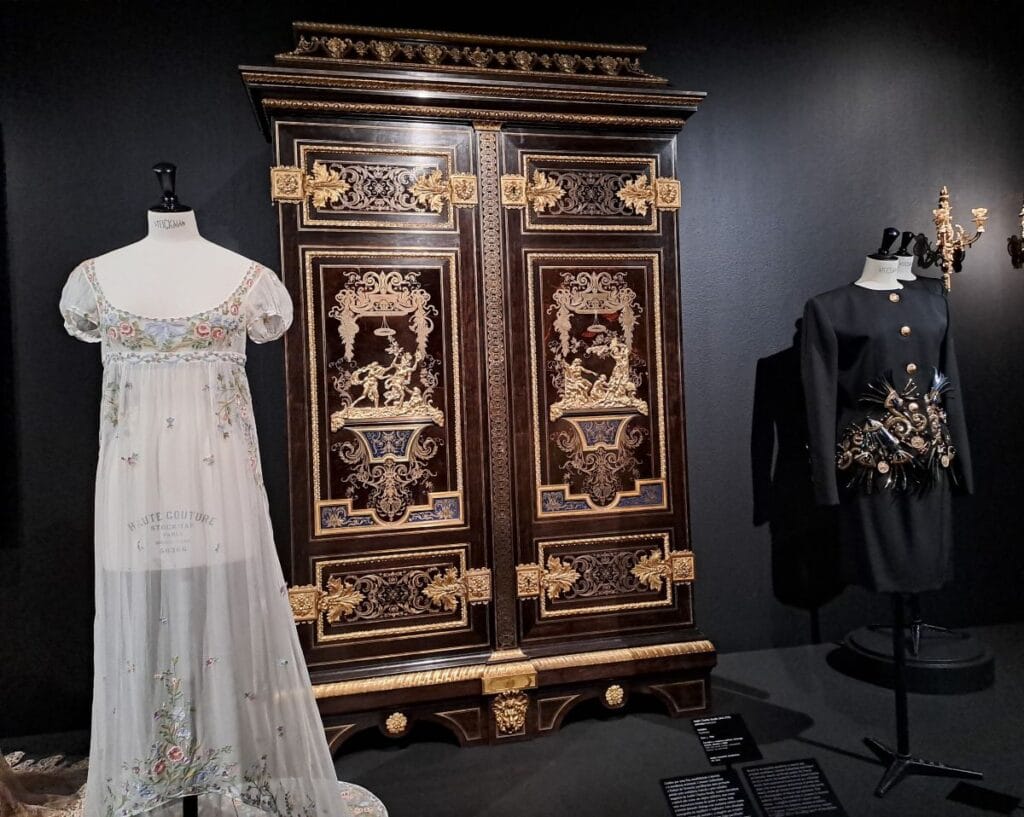
Calouste Sarkis Gulbenkian and his wife Nevarte’s interest in art and fashion, keeping up with the trends of their time. A photograph of their wedding on the bedside table and a portrait of Lady Elizabeth Conyngham by Sir Thomas Lawrence. A cabinet (1700) by André-Charles Boulle, made of exotic woods, bronze, tortoiseshell and brass, belonging to Calouste Gulbenkian. On the right, a coat and skirt by Hubert Givenchy. On the left, an Empire-style dress by John Galliano for Givenchy. On the right-hand side, a Hercules dress by Yves Saint Laurent and a calyx-krater vase.
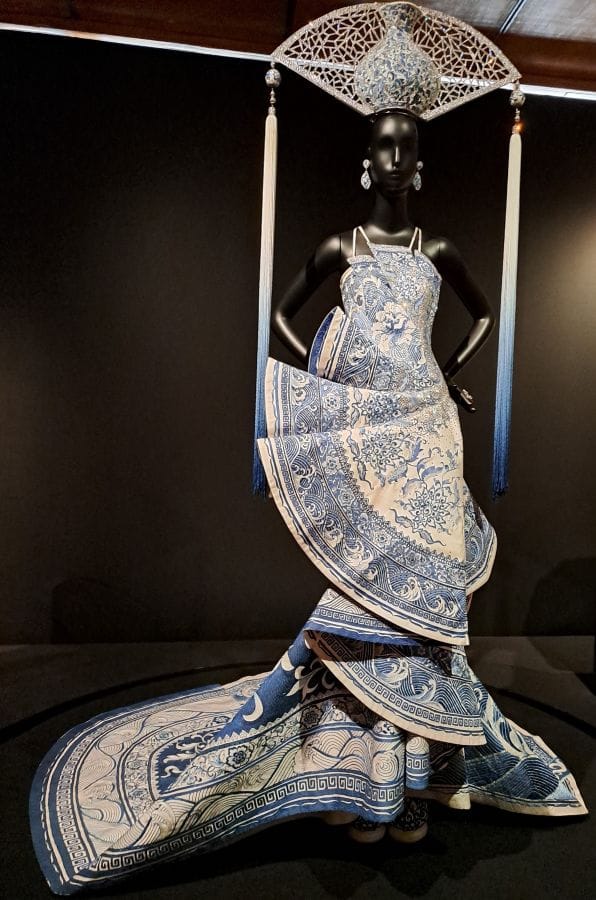
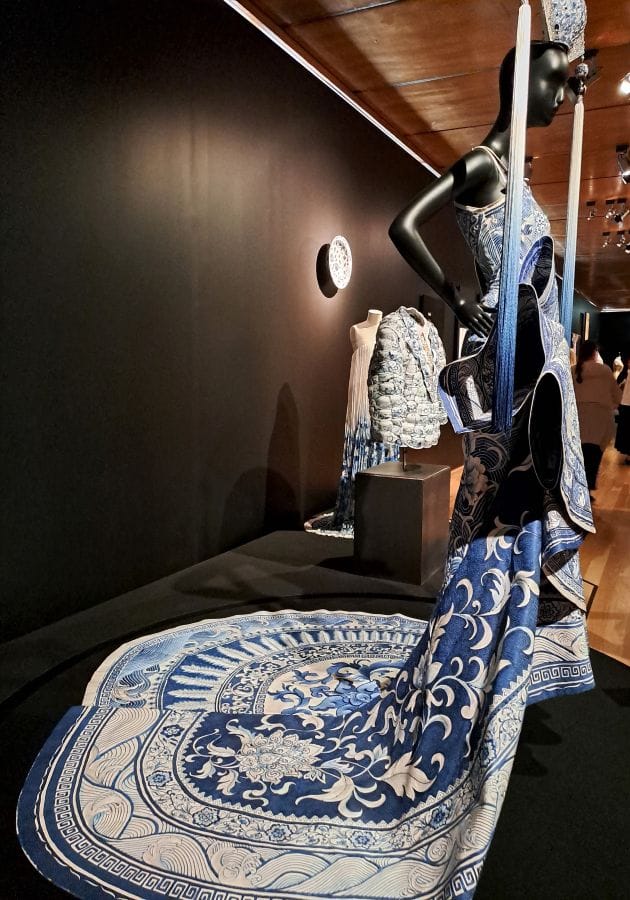
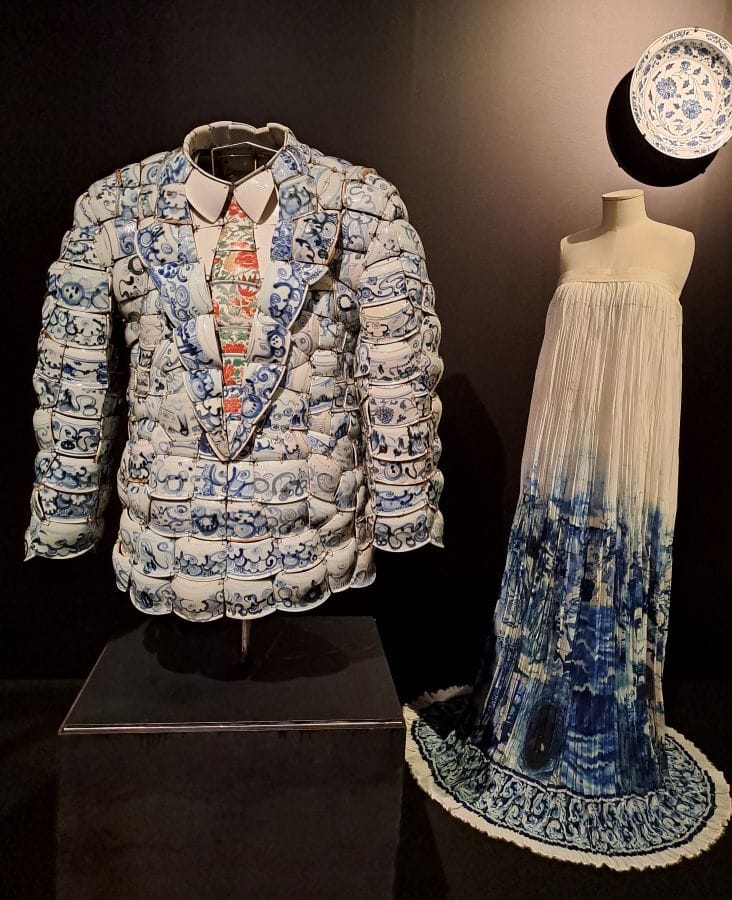
Below, Gou Pei’s ‘Blue and White Porcelain’ dress – silk, Swarovski crystals, resin and fragments of porcelain.
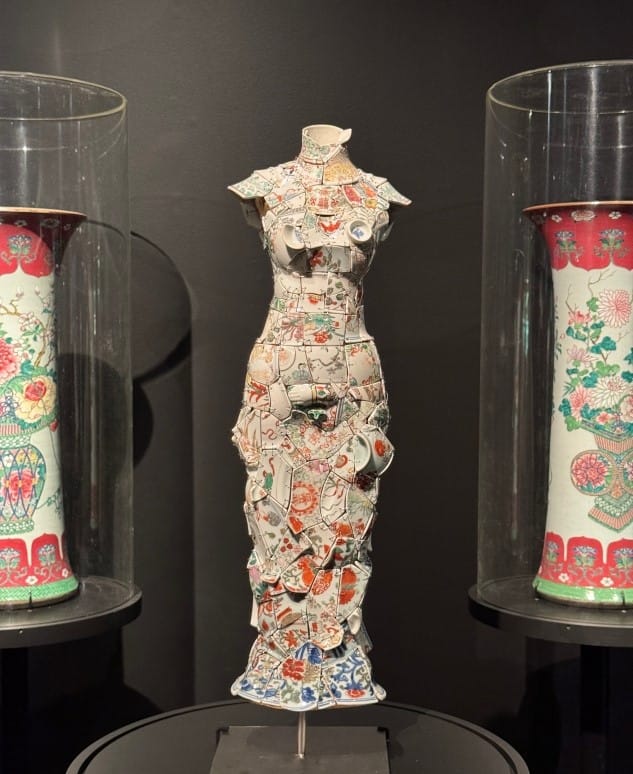
Above, on the left, the sculpture ‘Past Presence No. 1’ (2016) by Li Xiaofeng, constructed from fragments of Ming Dynasty porcelain held together by stainless steel. On the right, Li Xiaofeng’s ‘Ocean Travels’ coat, made from fragments of Ming Dynasty porcelain, and the ‘Sail’ dress by the duo Storytailors.
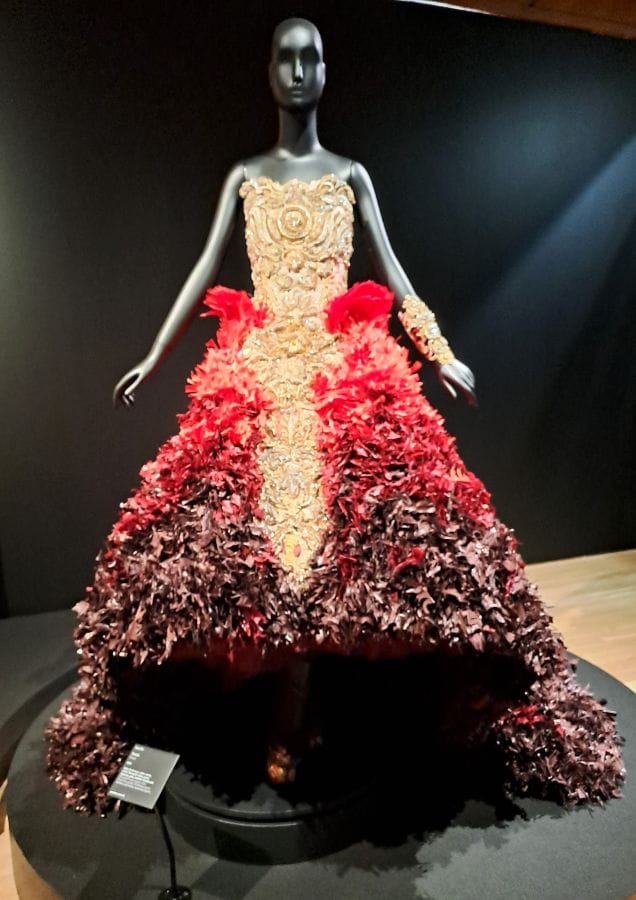
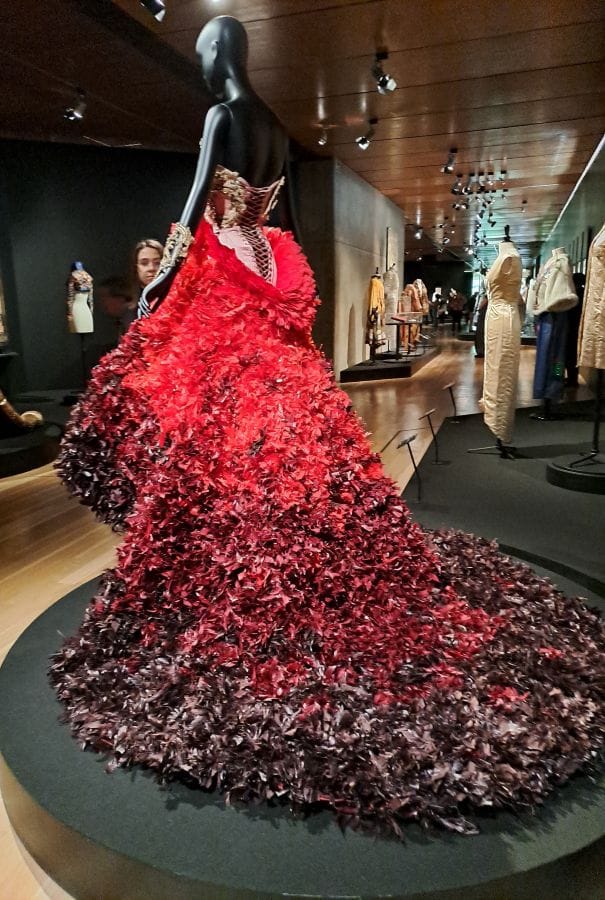
Below, a dress by Gou Pei made of silk, gold thread, Swarovski crystals, rhinestones and goose feathers.
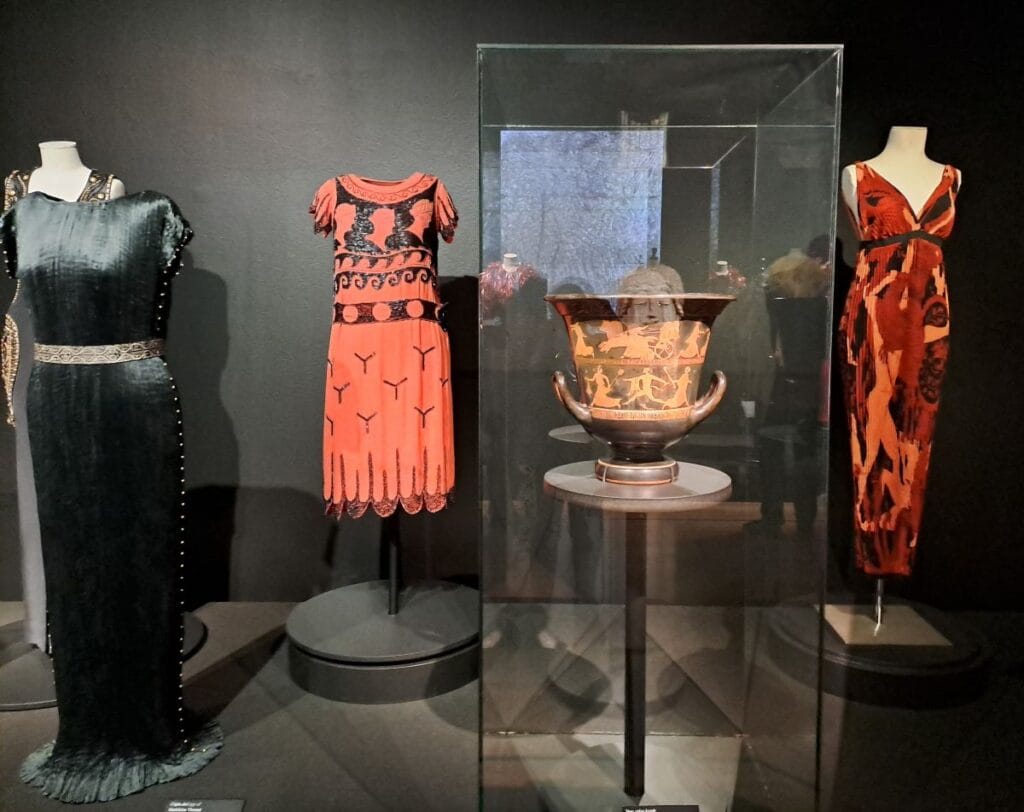
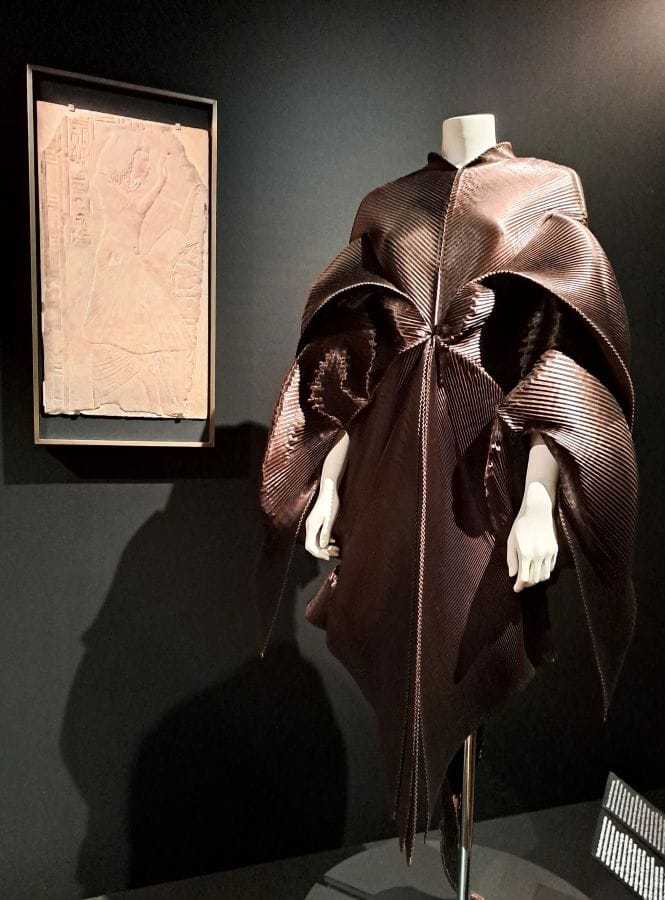
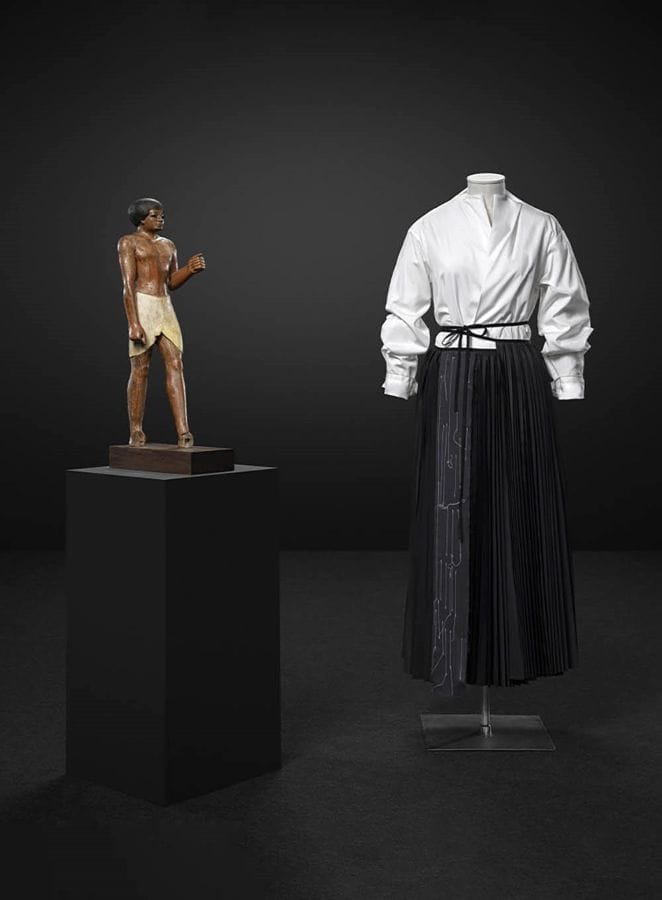
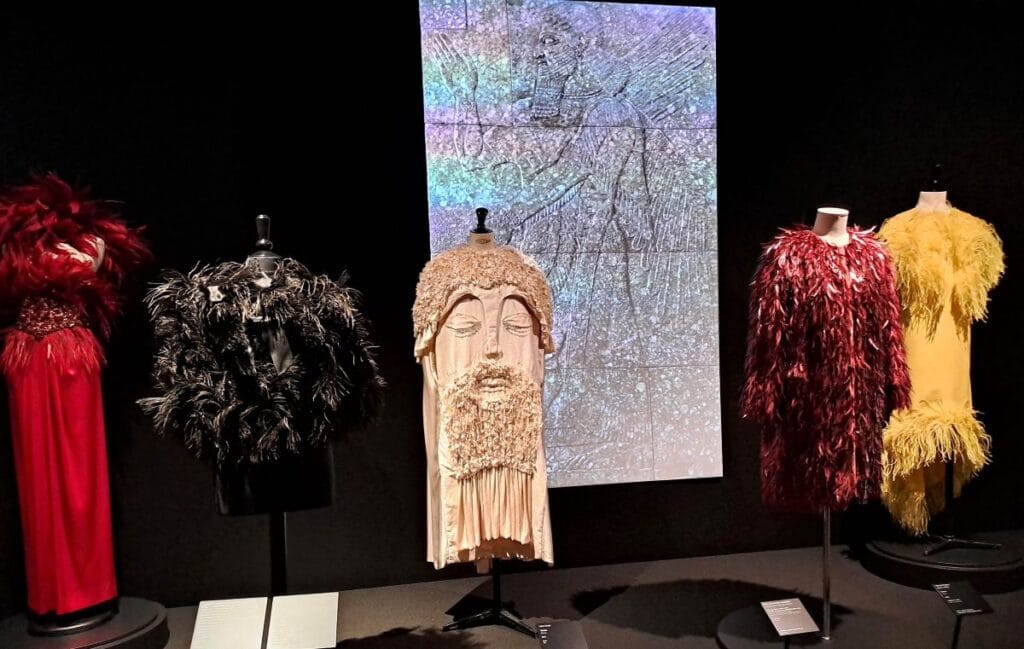
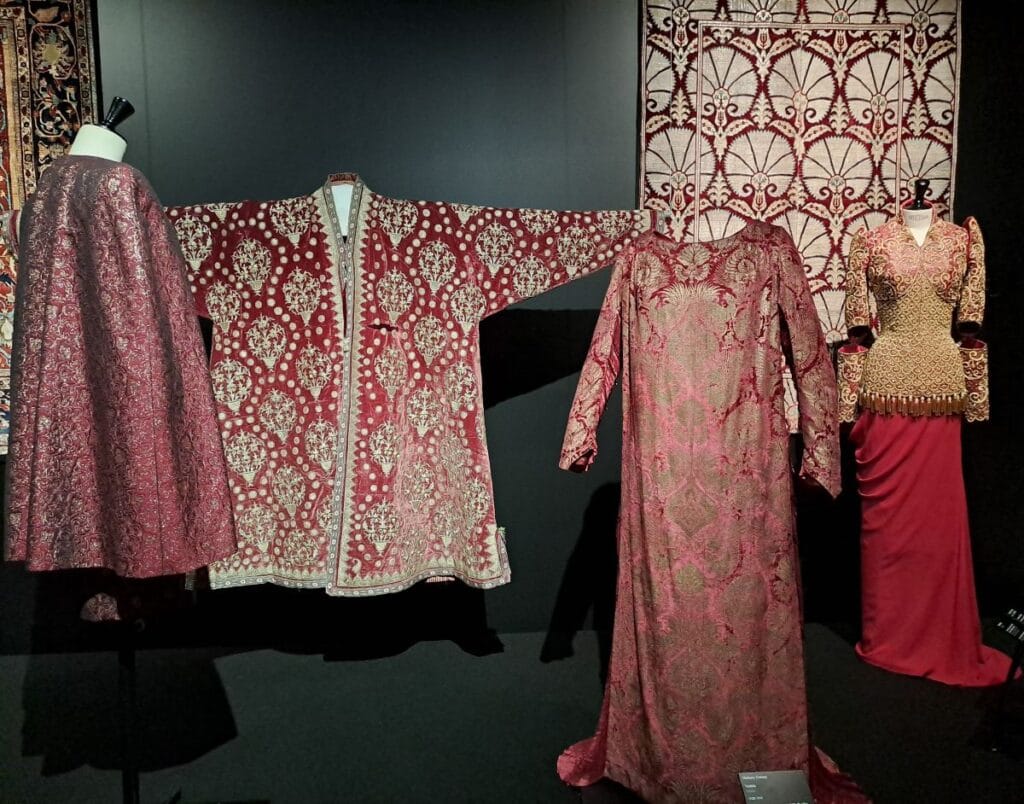
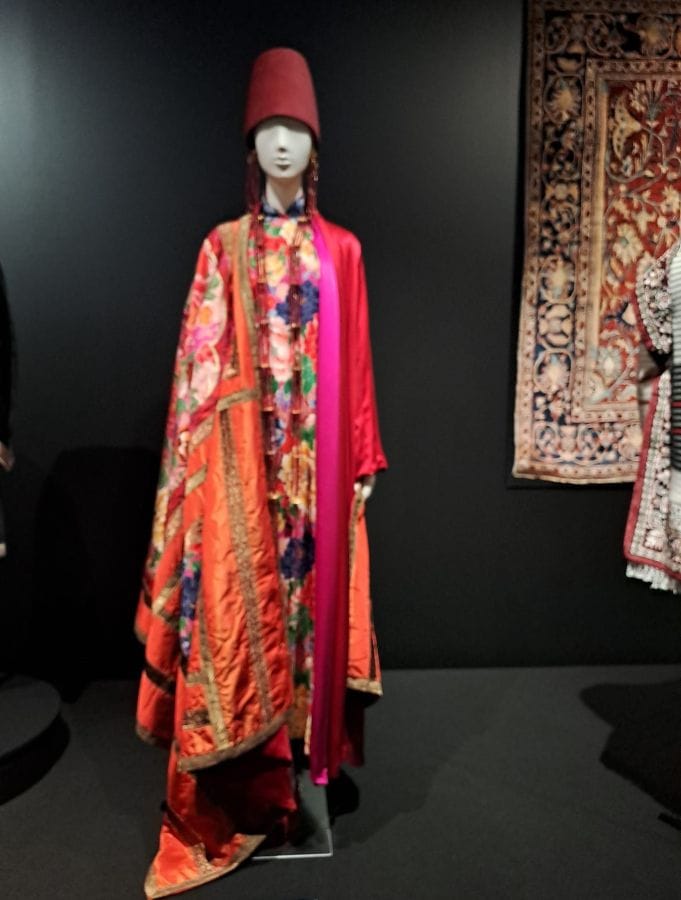
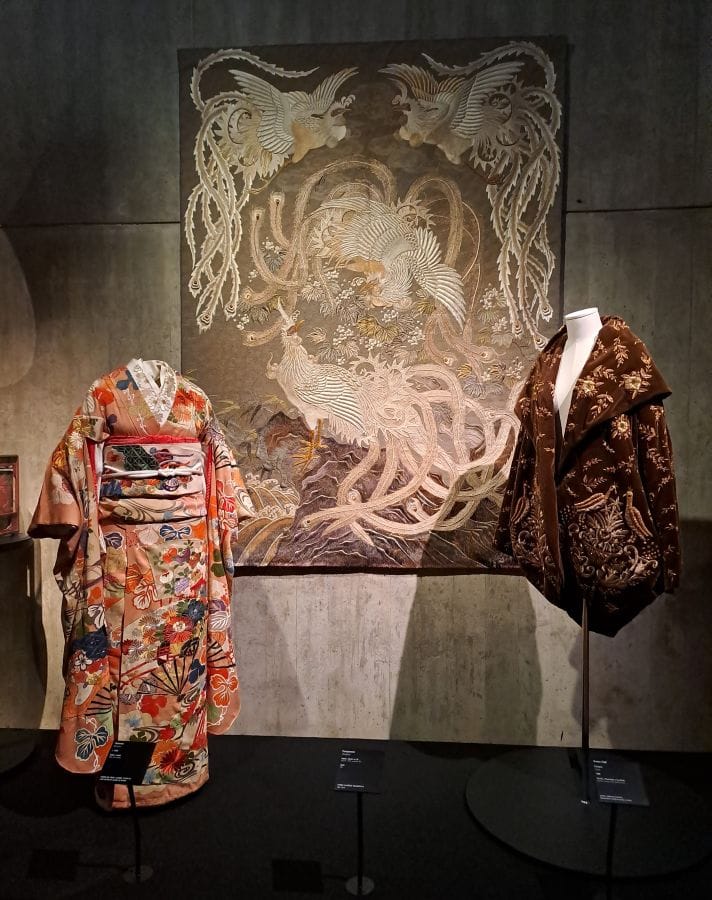
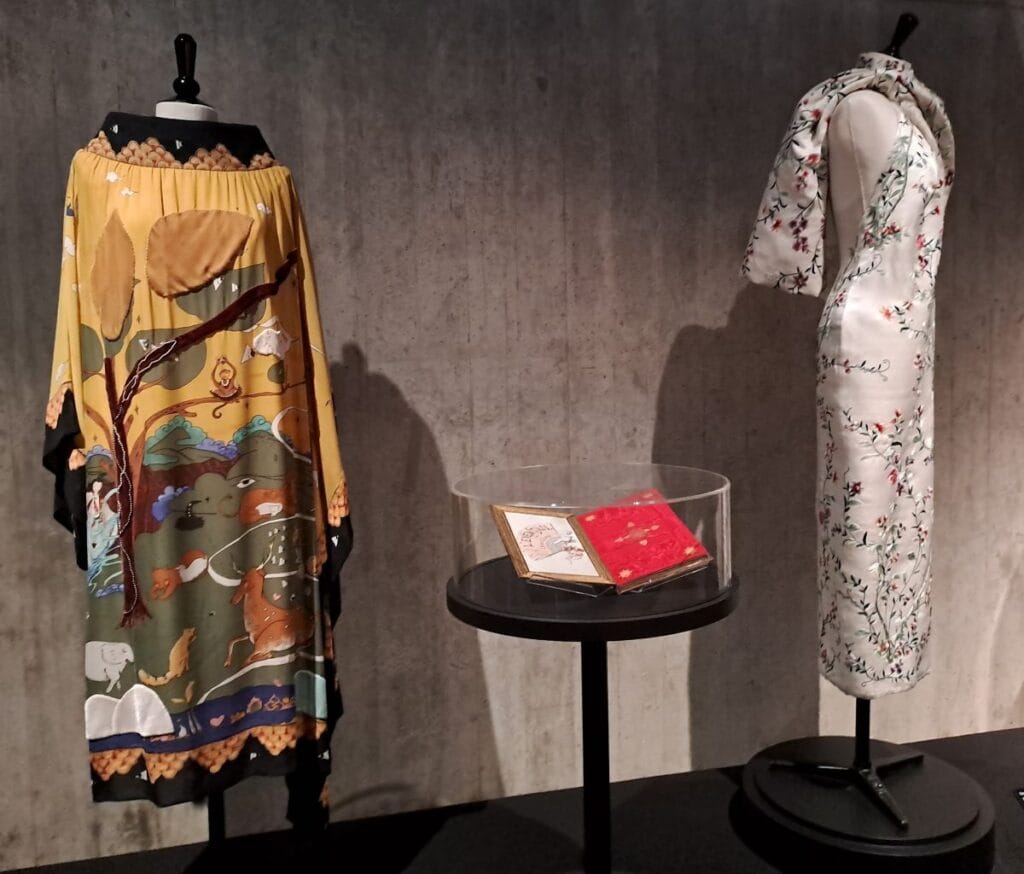
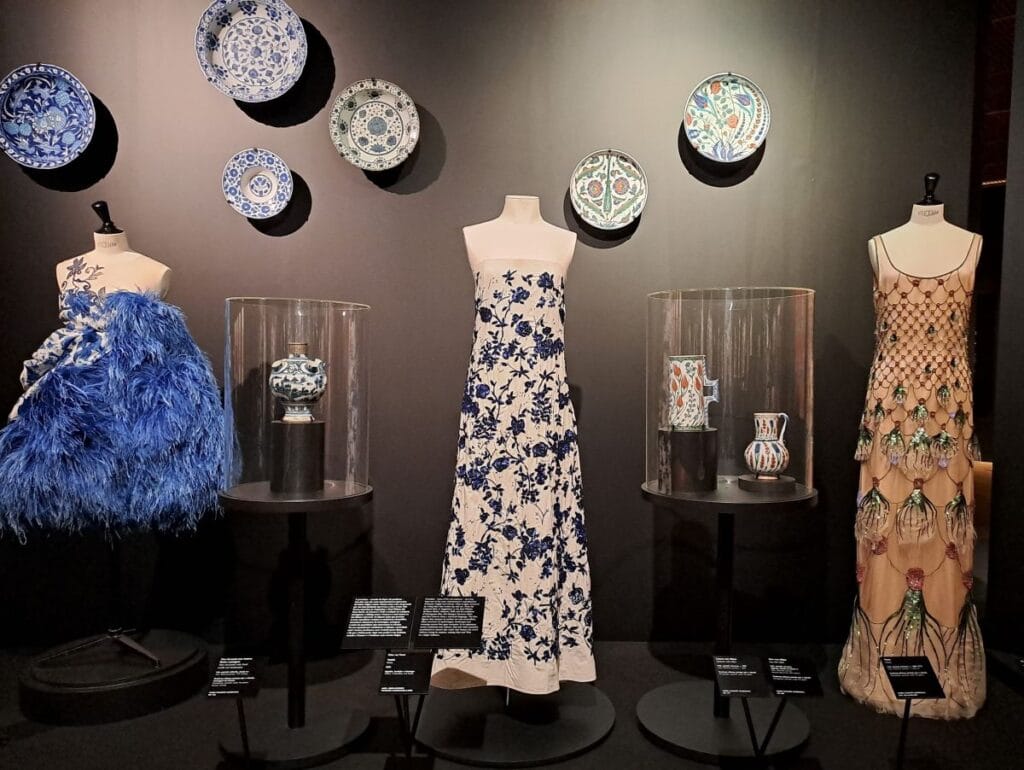
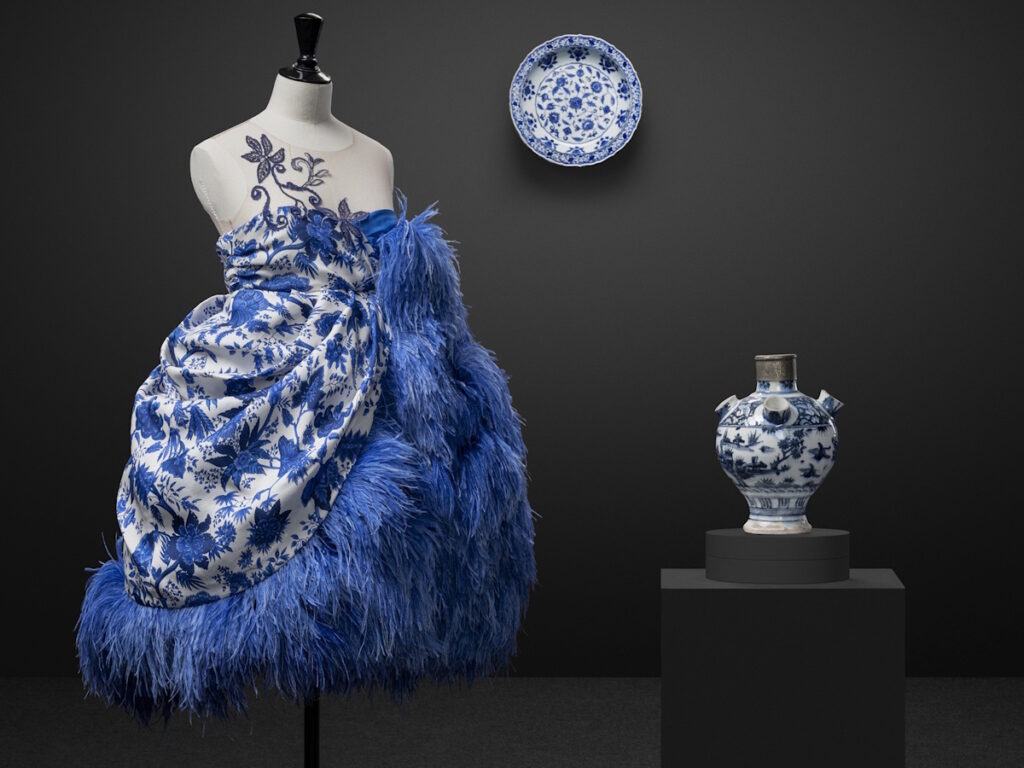
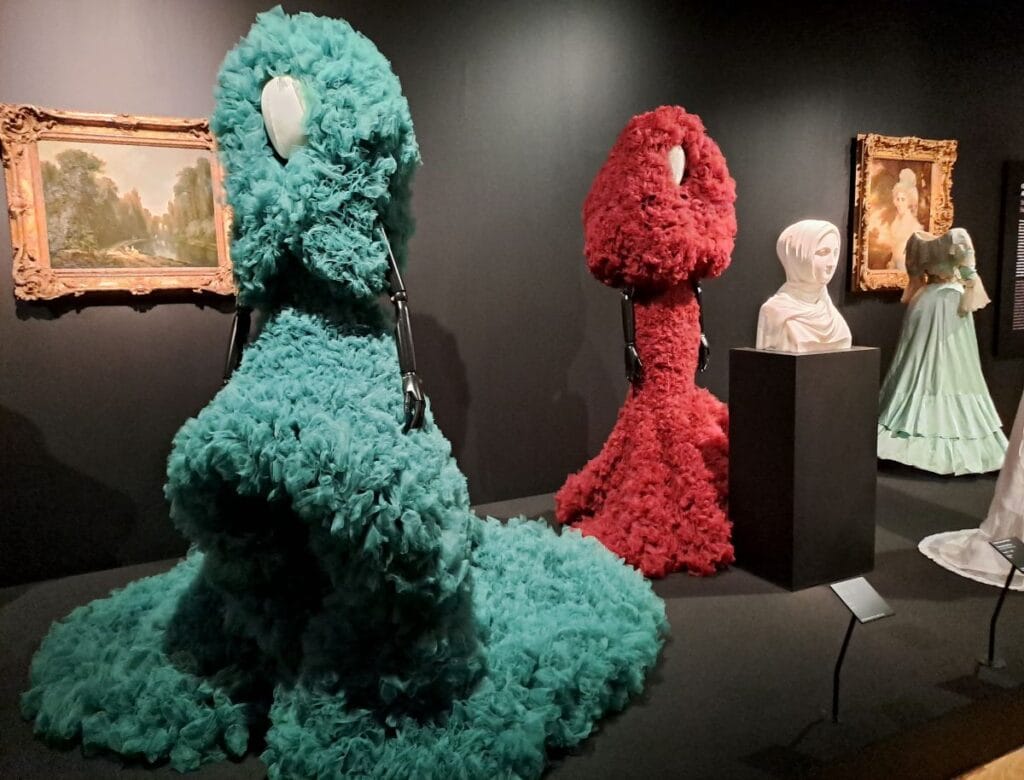
A bronze-coloured pleated dress by Issey Miyake and an Egyptian relief of AmenemhatSkirt and shirt by Yohji Yamamoto and an Egyptian funerary statue from the 11th DynastyOn the left, a red dress by Hubert Givenchy worn by Audrey Hepburn at a gala (Madrid Costume Museum)The Islamic world and floral motifs. In the centre, a red dress by Mariano Fortuny and, on the right, a piece by Storytailors. On the left, Turkish drapery from the Ottoman period. Kenzo Takada – a coordinated outfit comprising a jacket, dress, cloak, hat, bracelet, necklace, earrings and shoes.Fashion and art in Japanese cultureOn the left, a dress by Tsumori Chisato. On the right, a Chinese-style evening dress in raw silk with hand embroidery, by Cristóbal Balenciaga. Chinese porcelain as the inspiration for Christian Dior’s flower-embroidered dressJosep Font for Delpozo – a dress with a voluminous skirt, adorned with blue feathers. The blue and white pattern is inspired by porcelain, like the Iznik plate beside it.
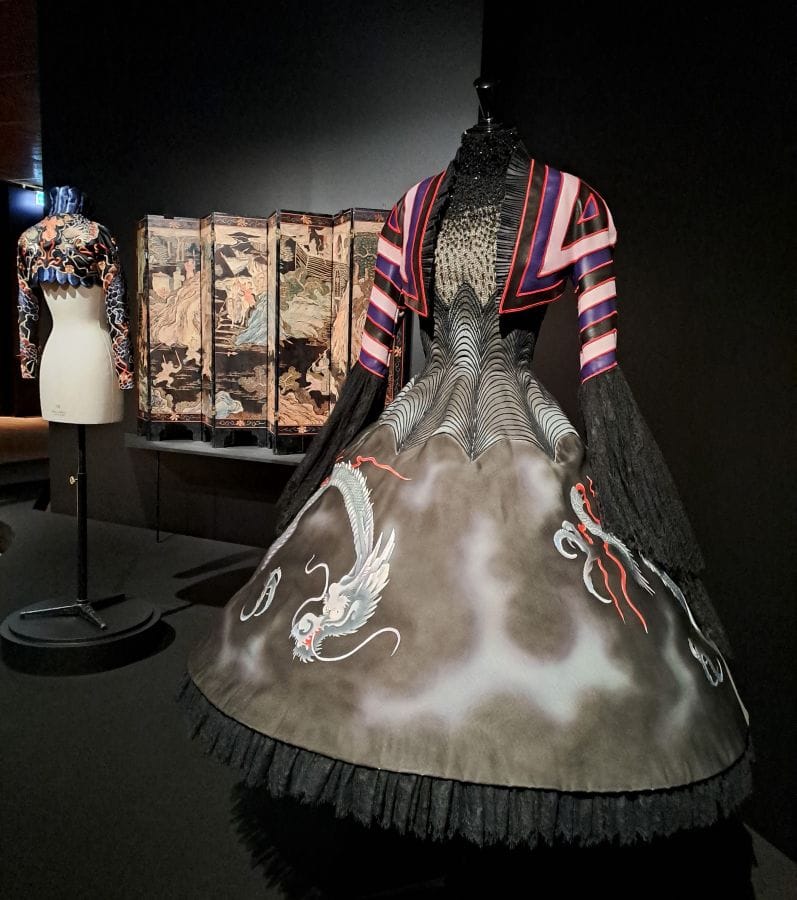
Alexander McQueen for Givenchy, 1997 – a grey skirt, adorned with hand-painted and hand-embroidered Chinese dragons, and a bolero
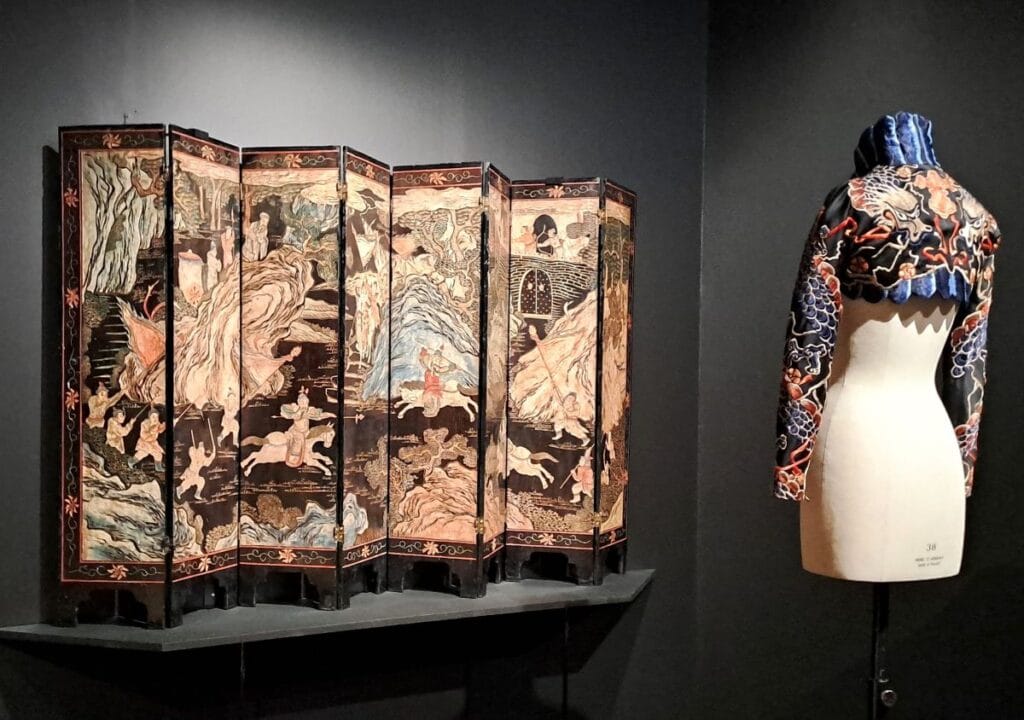
An embroidered bolero featuring imperial dragons, by Alexander McQueen for Givenchy. A Coromandel Chinese screen.
Below, dress and cloak by Gou Pei.
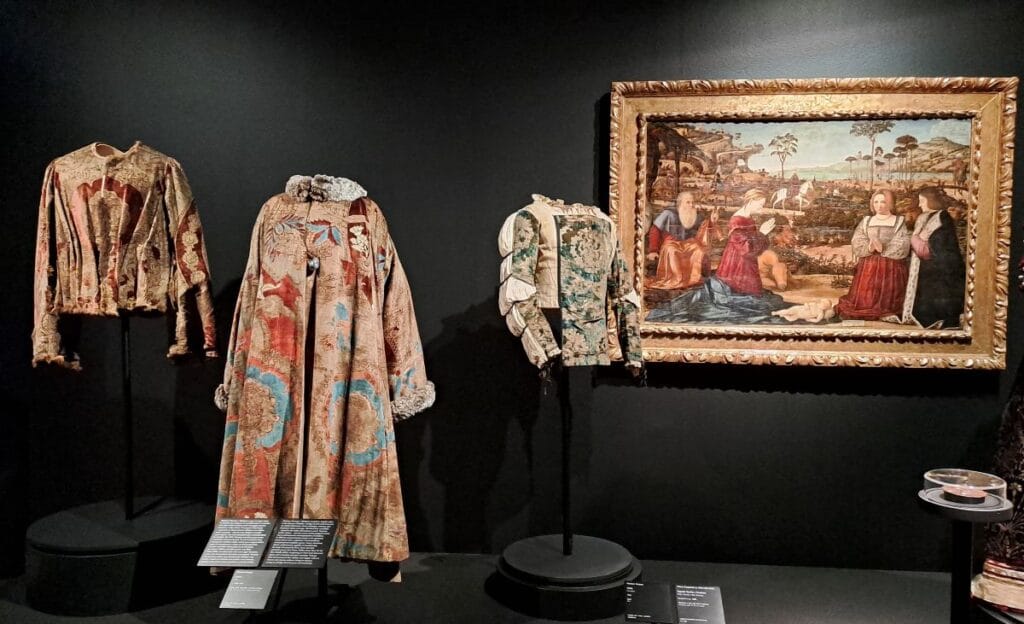
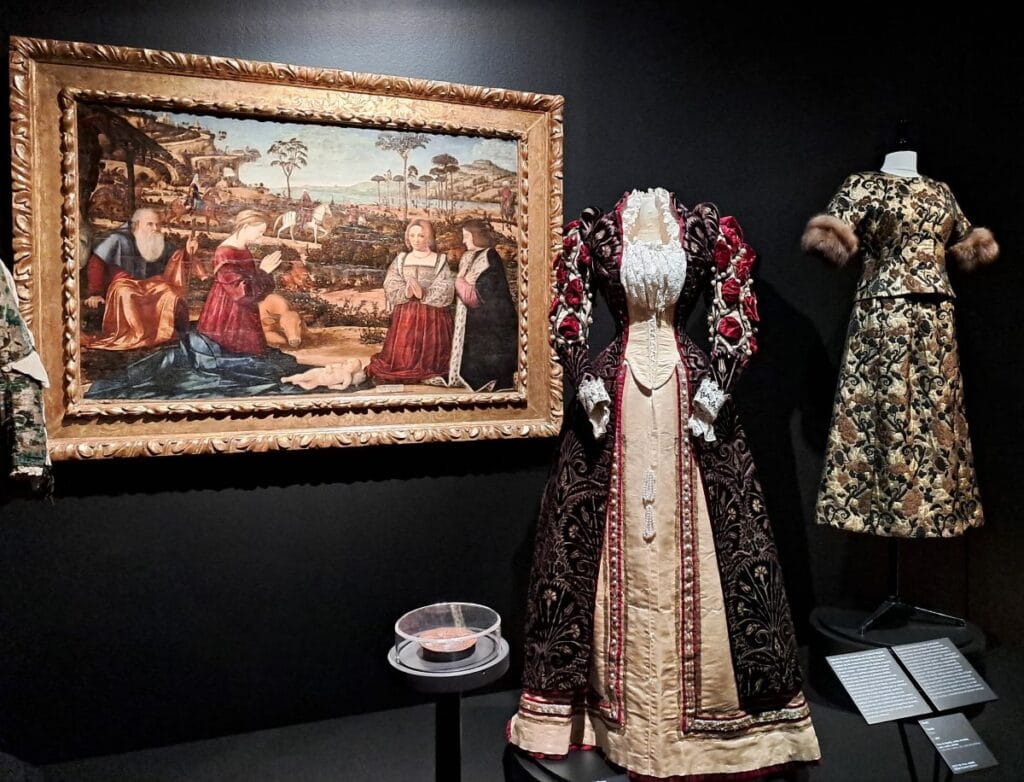
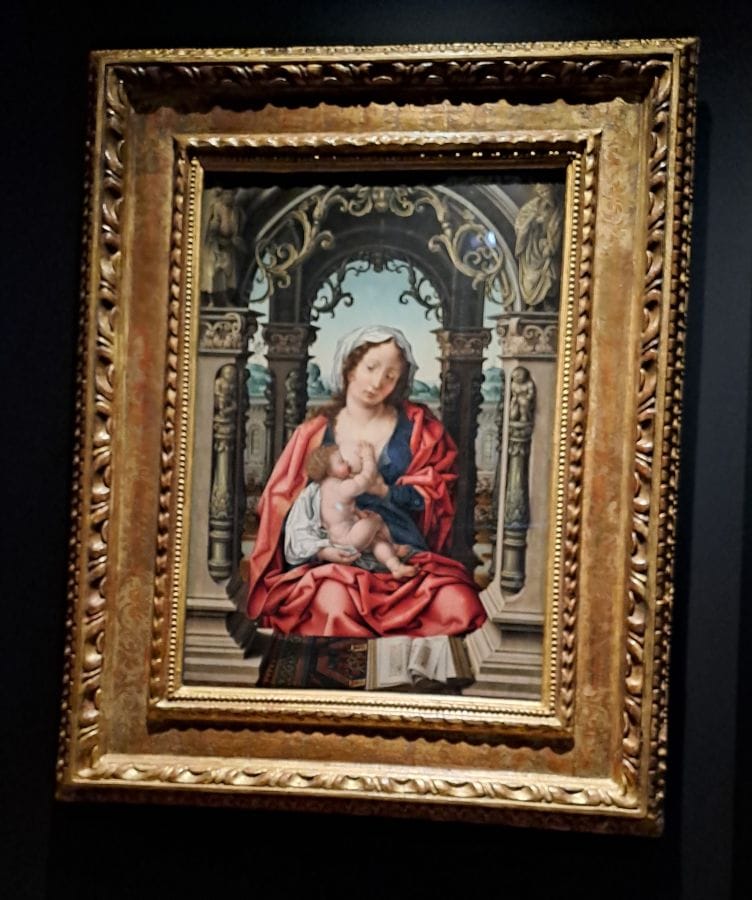
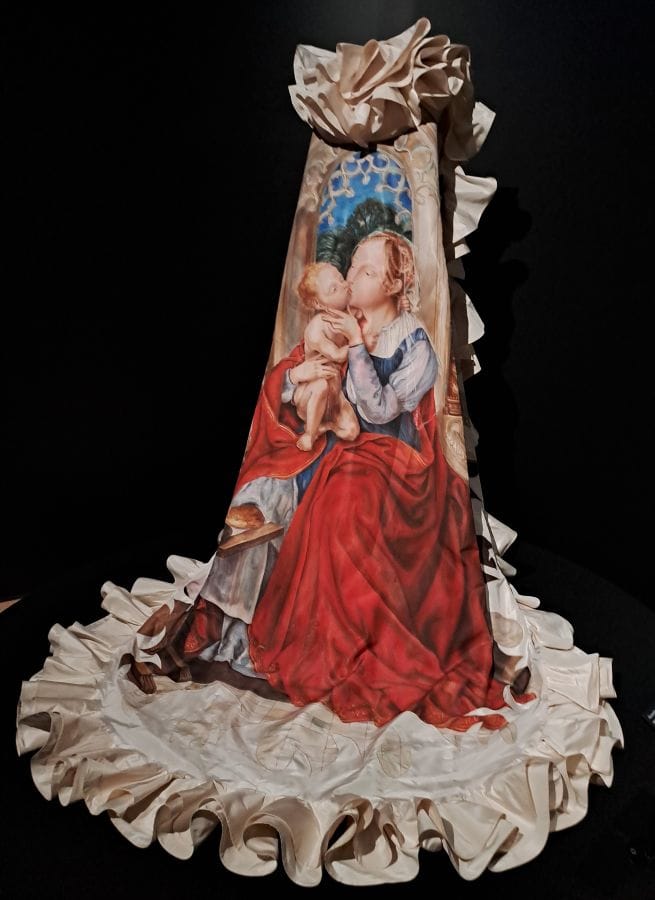
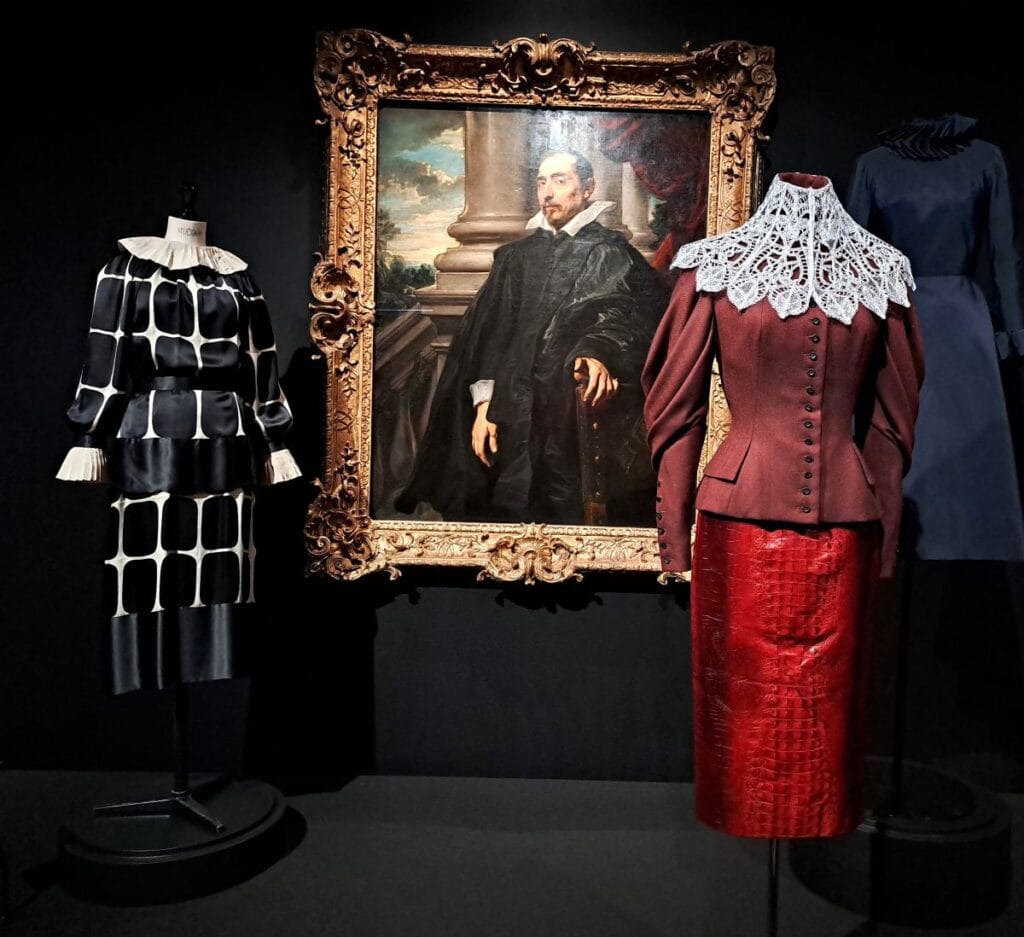
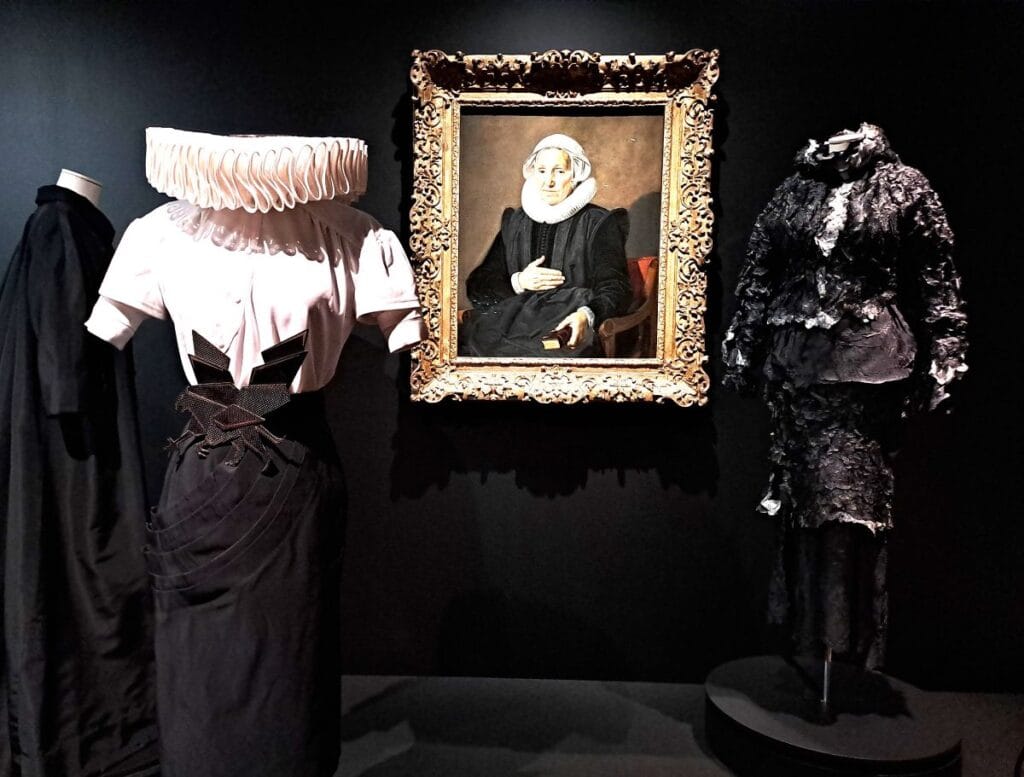
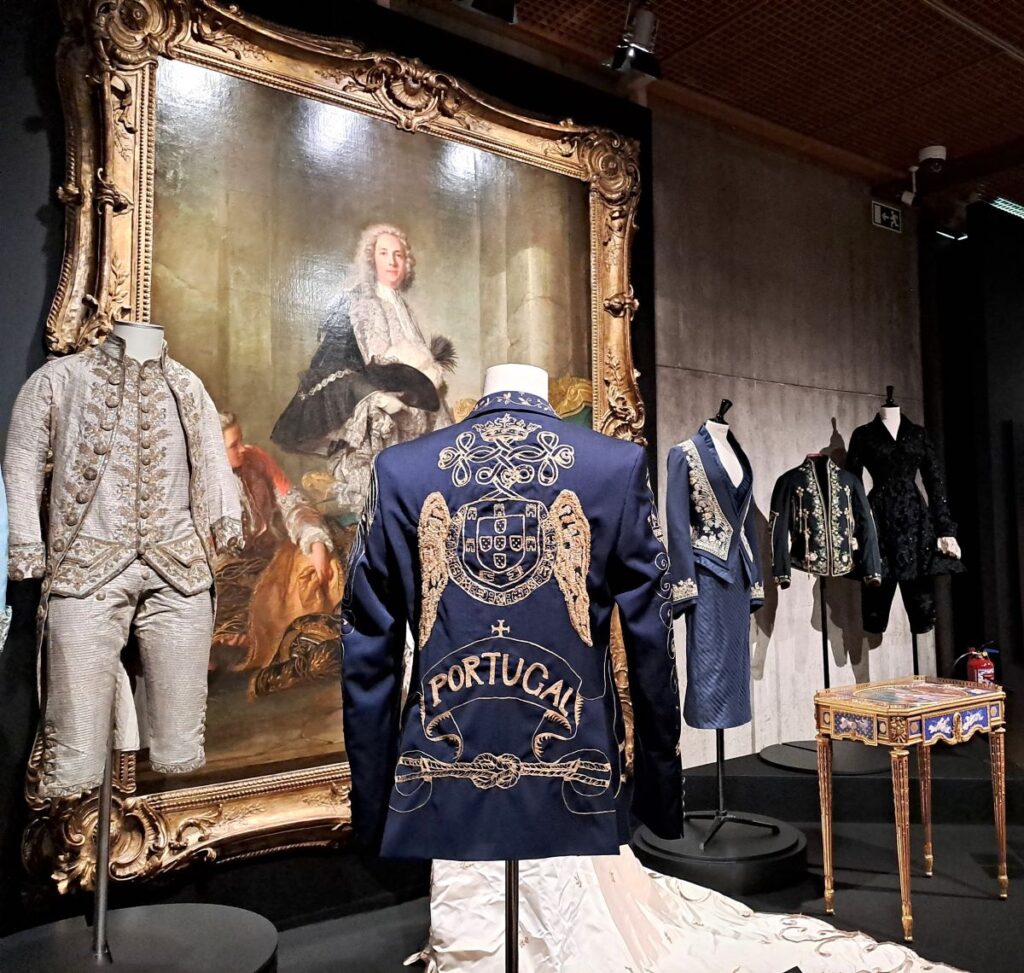
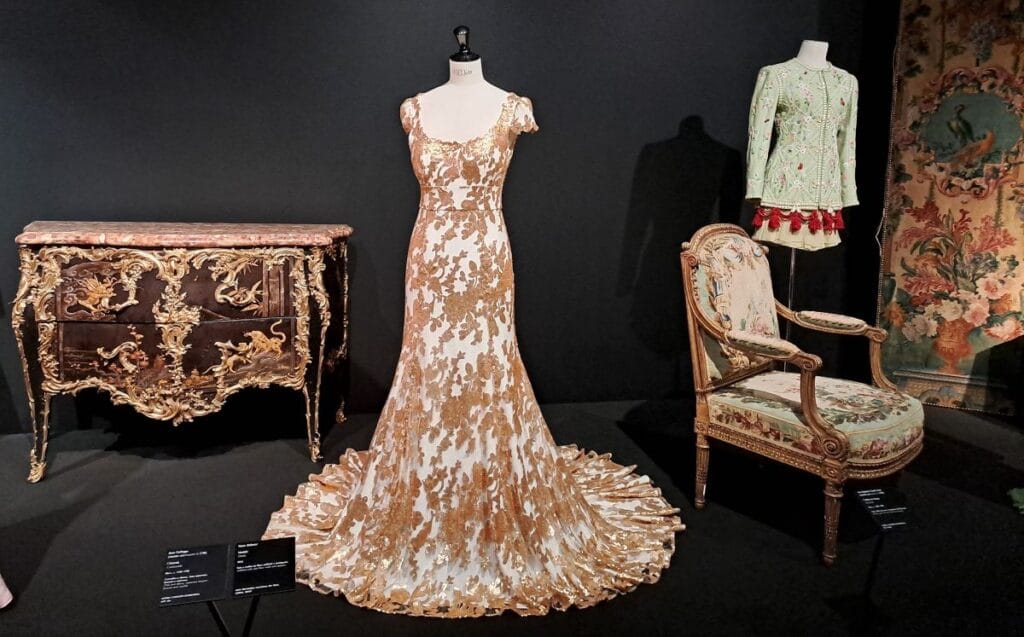
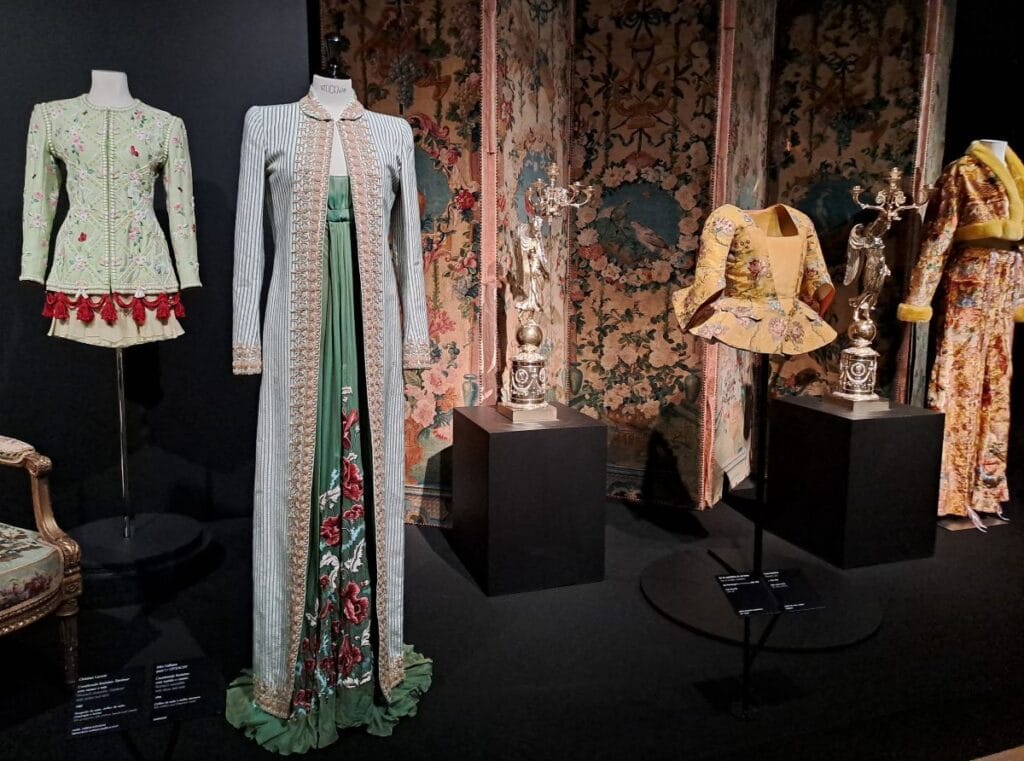
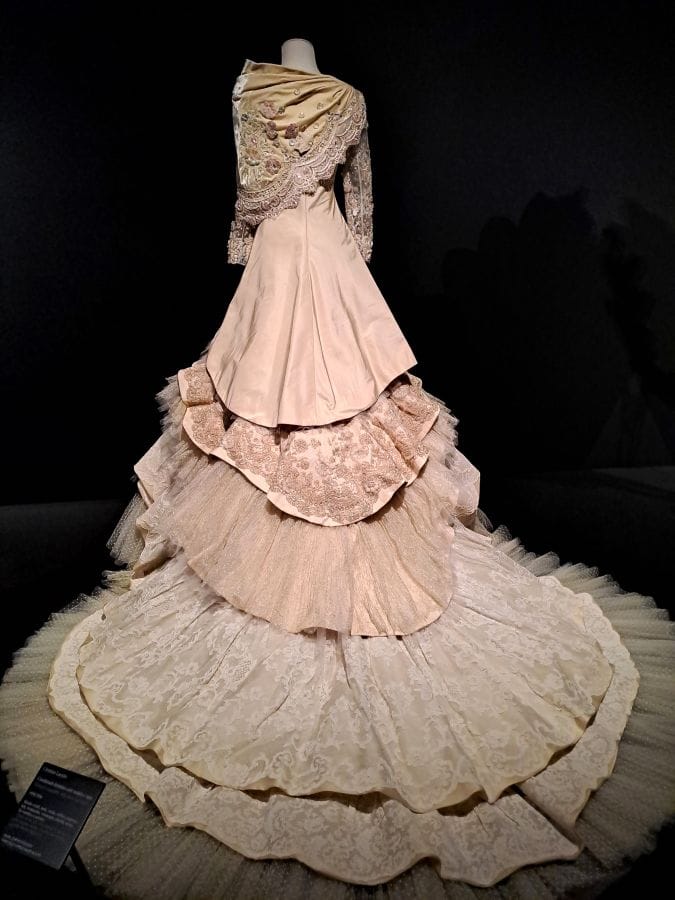
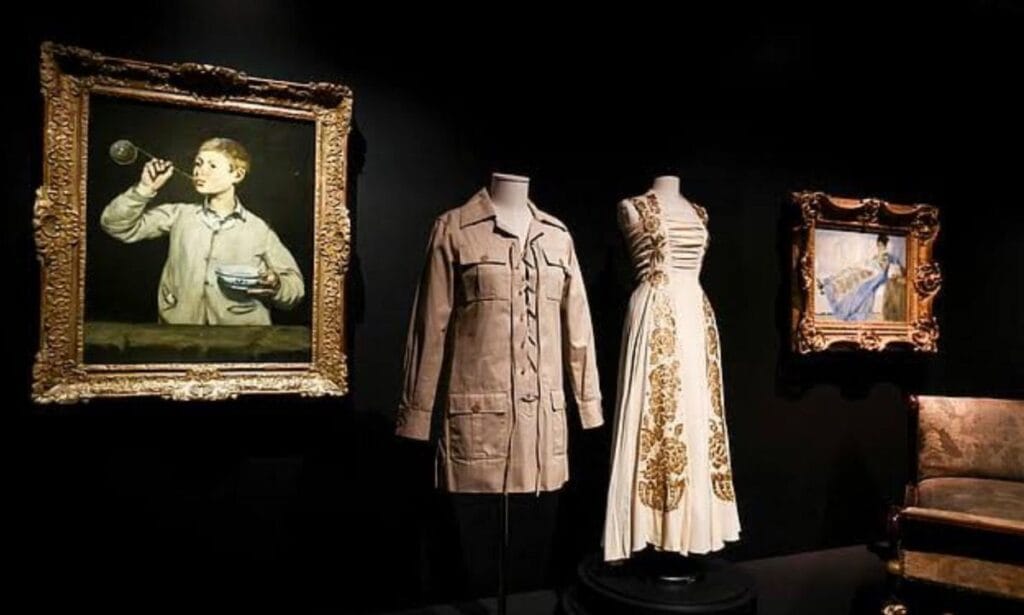
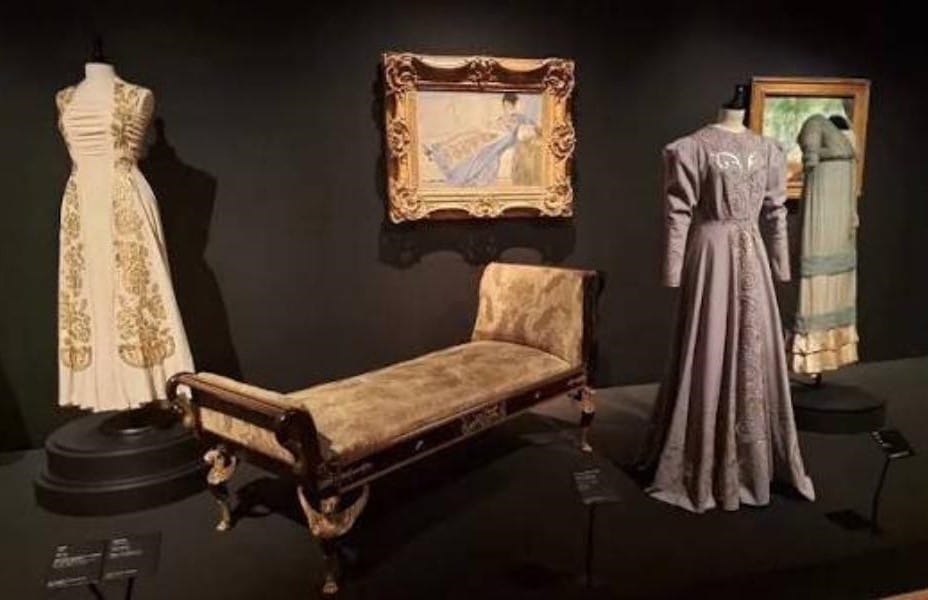
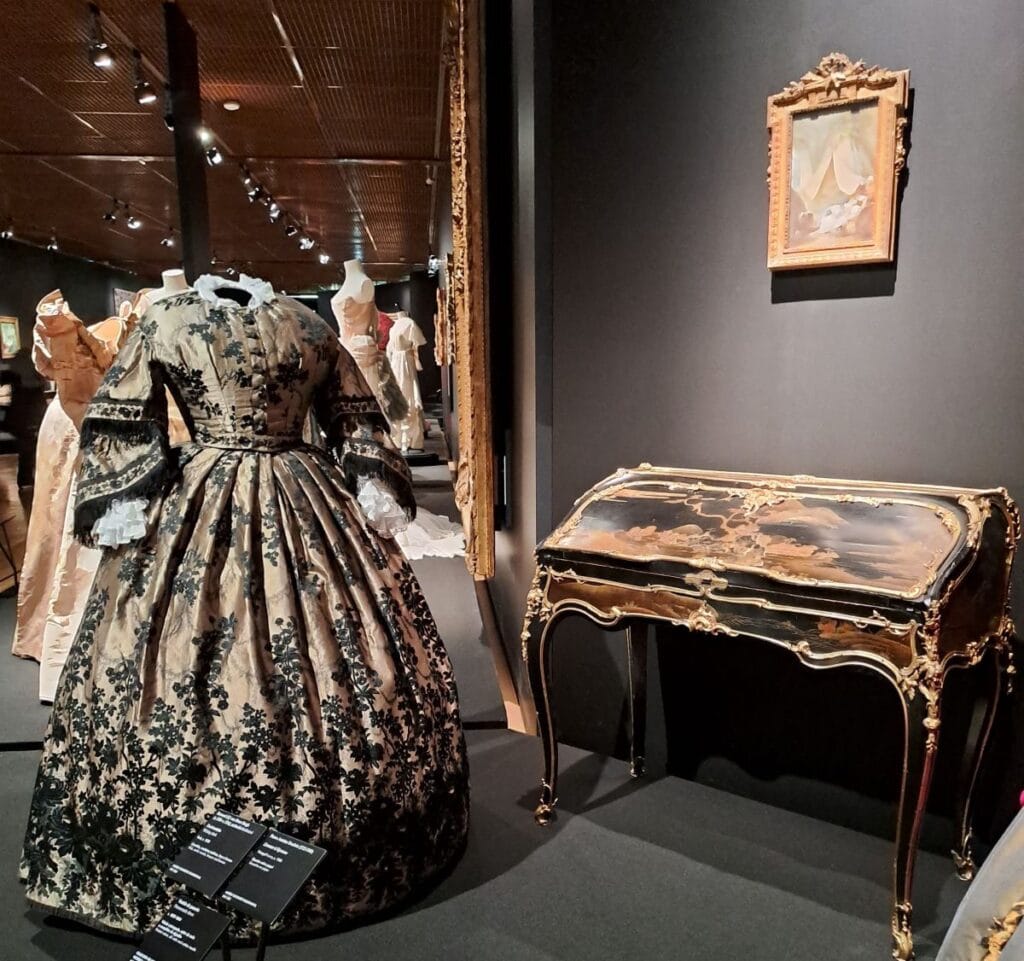
Painting ‘The Holy Family and the Donors’ by Vittore Carpaccio. On the left, a silk and fur coat by Mariano Fortuny, chosen by Orson Welles for the film ‘Othello’. A Tudor-style ball gown by Charles Frederick Worth and, alongside it, a vintage ensemble in golden floral brocade with leather-trimmed sleeves by Cristóbal Balenciaga.‘The Virgin and Child’, by the Flemish artist Jan Cossart, known as MatuseAlexander McQueen for Givenchy – hand-painted silk dress and capeAlexander McQueen for Givenchy – on the right, a jacket with a lace collar and a crocodile-textured leather skirt. Painting ‘Portrait of a Man’ by Sir Anthony van Dyck. On the right, a matching blouse and skirt by Issey Miyake. Painting by Frans Hals, ‘Portrait of Sara Andriesdr Hessix’ (1626). Nuno Gama – coat of arms of Portugal. Painting by Jean Marc Nattier, ‘Portrait of the Marshal, Duke of Richelieu’. On the left, a silk dress by Yves Saint Laurent. On the right, a wedding dress by Hubert de Givenchy in organza and silk faille, embroidered with sequins. Dress by Nuno Baltazar. Chest of drawers by Jean Deforges. On the left, a dress and coat by John GallianoChristian Lacroix – an ensemble comprising a dress and cape made of velvet, silk, lace, chiffon, organza, tulle, sequins, rhinestones and pearls.Gou Pei – ‘Arabian Princess’ dressOn the right, an evening gown from the early 1900sYves Saint Laurent – the saharienne that revolutionised women’s fashion. Painting ‘The Soap Bubbles’ by Édouard Monet. Steel-blue dress by Jacques Doucet
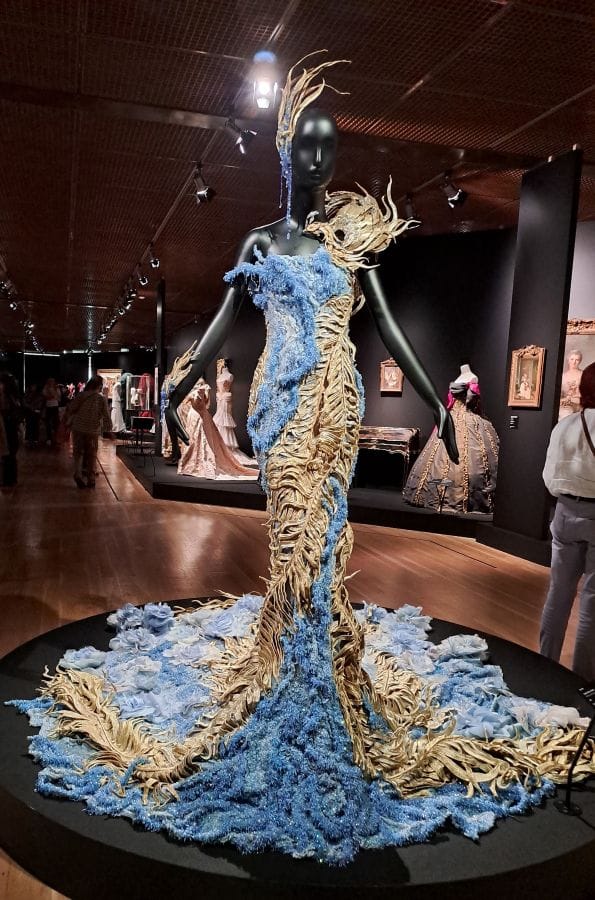
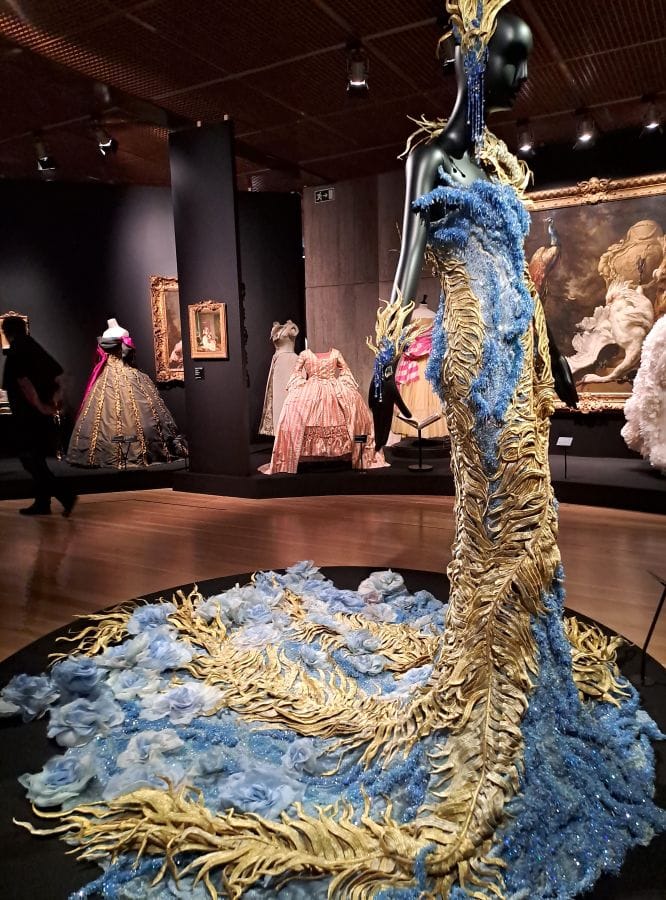
Below, the ‘Phoenix and Peony’ dress by Gou Pei, in silk, sequins, metallic-thread guipure lace, bronze, Swarovski crystals, rhinestones and beads (2012).
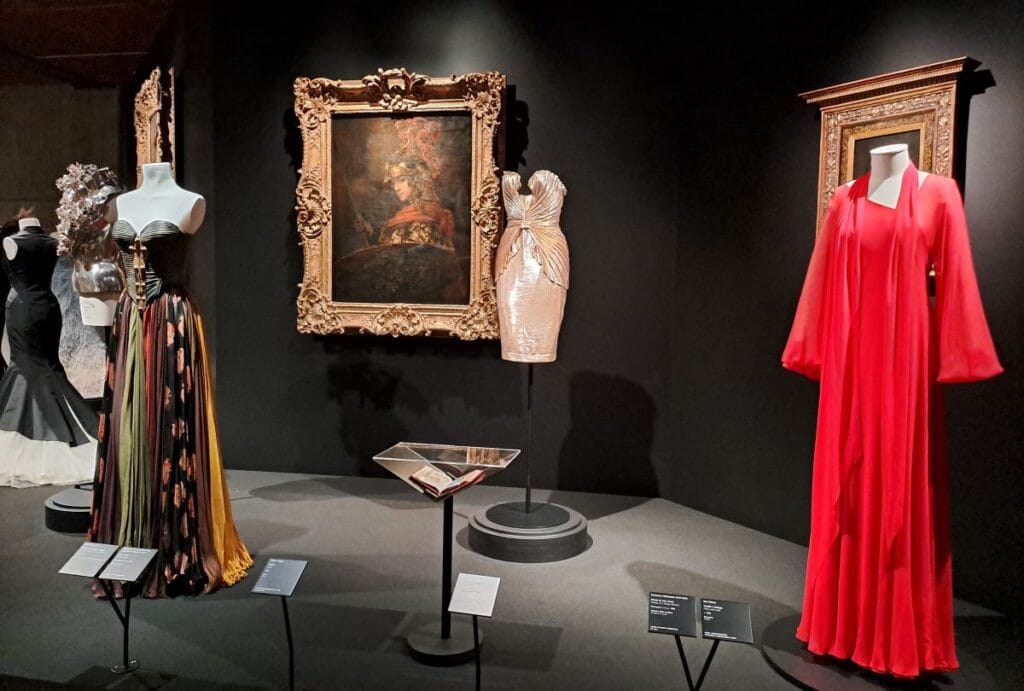
On the left, a ‘Kiss me Dogan’ bodice and skirt in leather, silk, metal and printed silk chiffon, by Christian Lacroix. In the background, a lamé dress by Thierry Mugler. On the right, a red draped dress by Hubert de Givenchy. Rembrandt’s painting ‘Pallas Athena’.
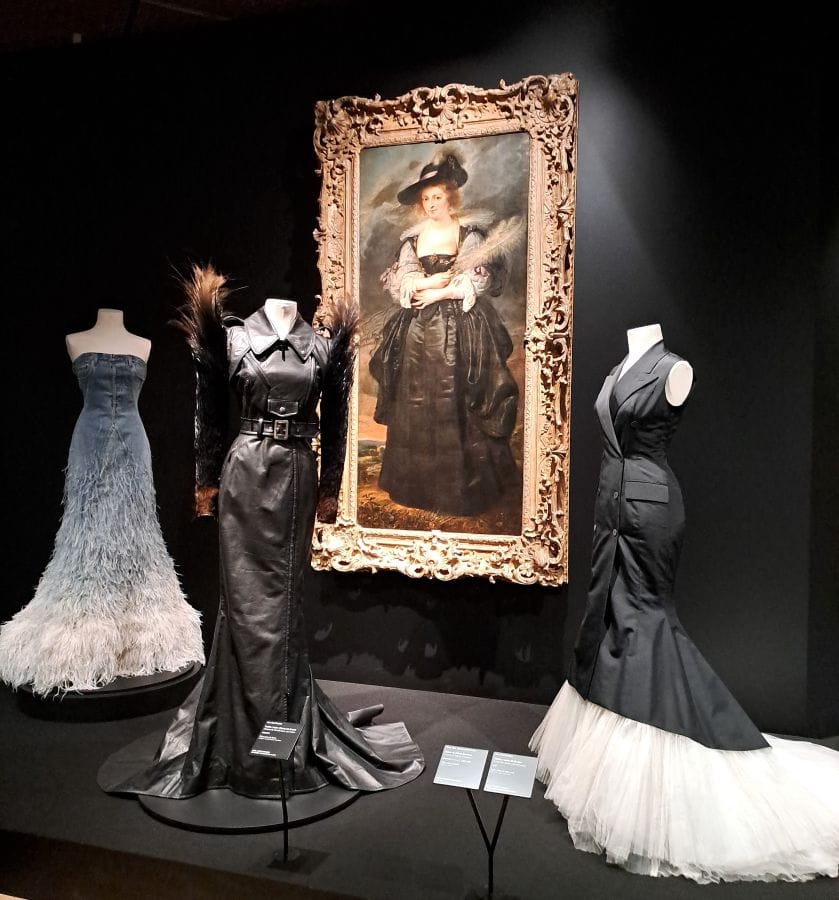
On the right, the ‘Séville’ dress and petticoat in silk, silk satin and tulle, by Jean Paul Gaultier (1999). In the centre, the ‘Oiseaux du Paradis’ dress and bolero, and on the left, a dress in a denim ombre effect ending in a cascade of feathers, both by Jean Paul Gaultier. ‘Portrait of Helena Forment’, by Peter Paul Rubens.
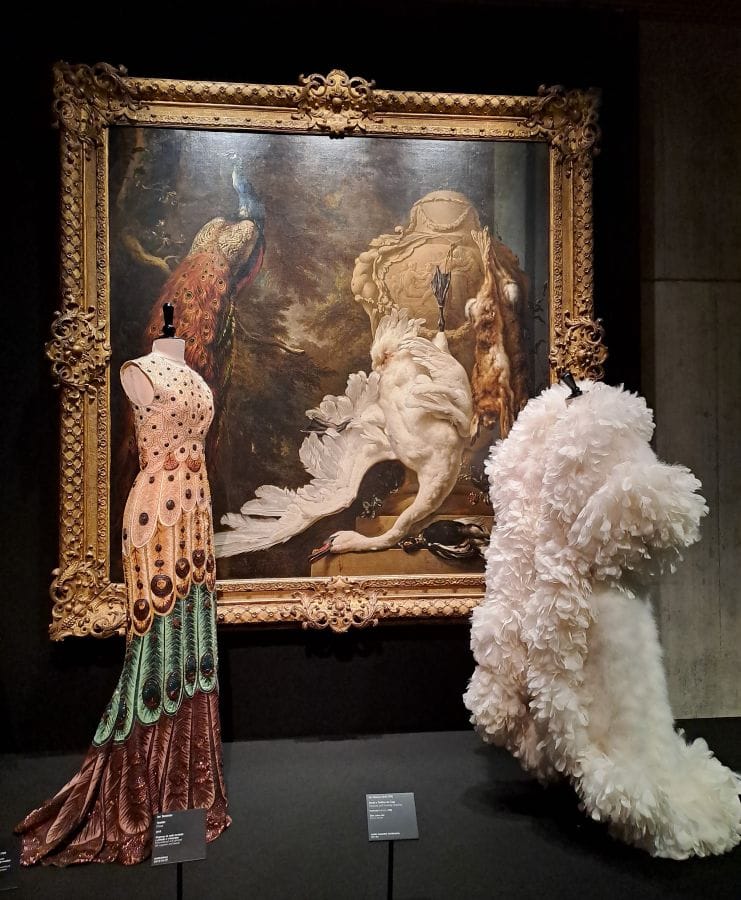
On the right, a goose-down coat by Manuel Pertegaz (1960), from the Costume Museum in Madrid. On the left, a dress in embroidered and painted silk organza with beads, by Jan Taminiau (2018). Painting ‘Peacock and Hunting Trophies’ (1708), by the Dutch artist Jan Weenix.
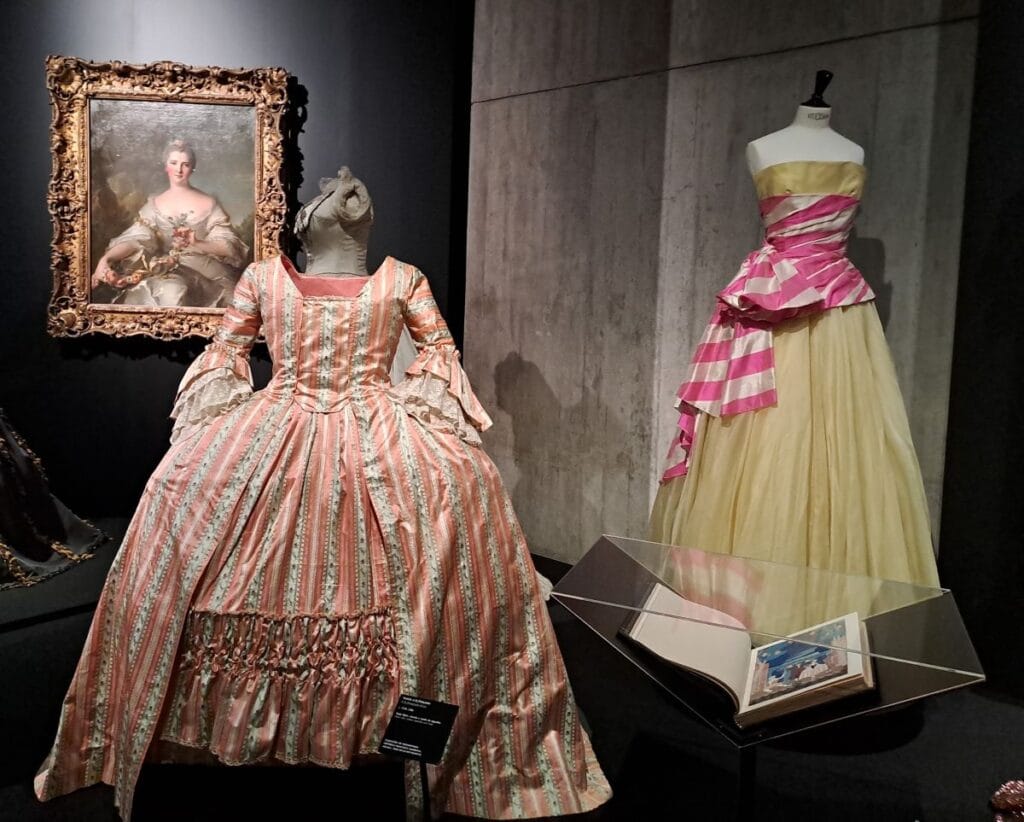
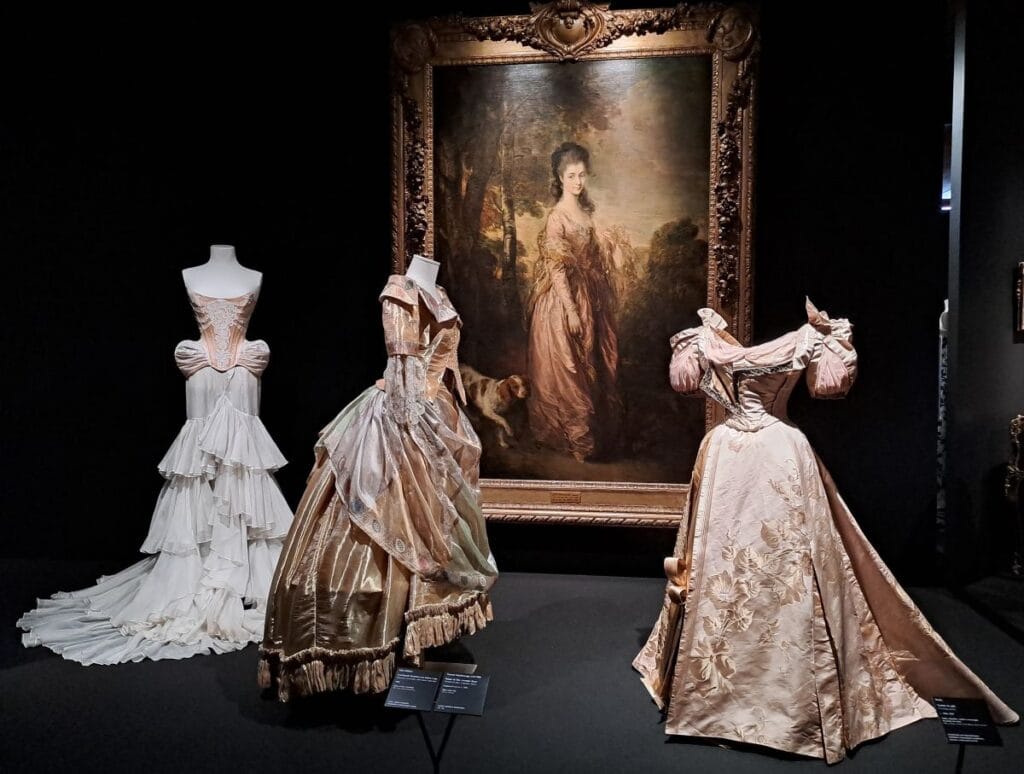
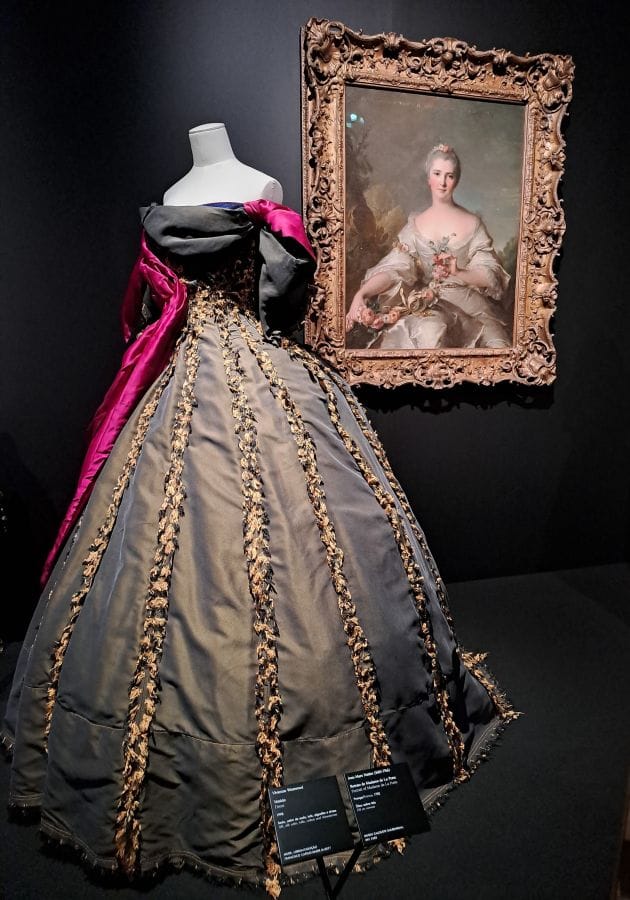
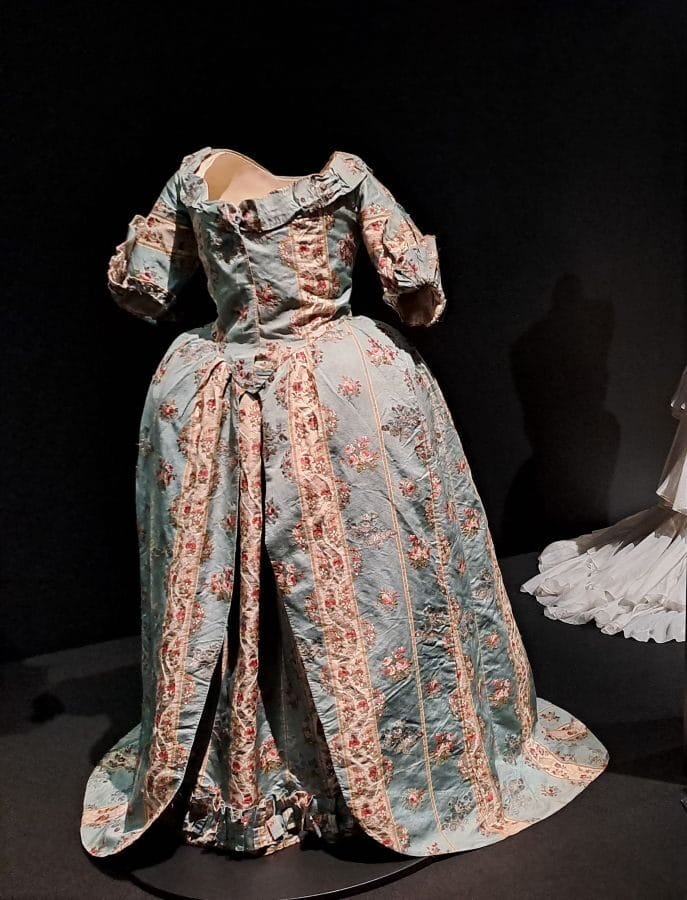
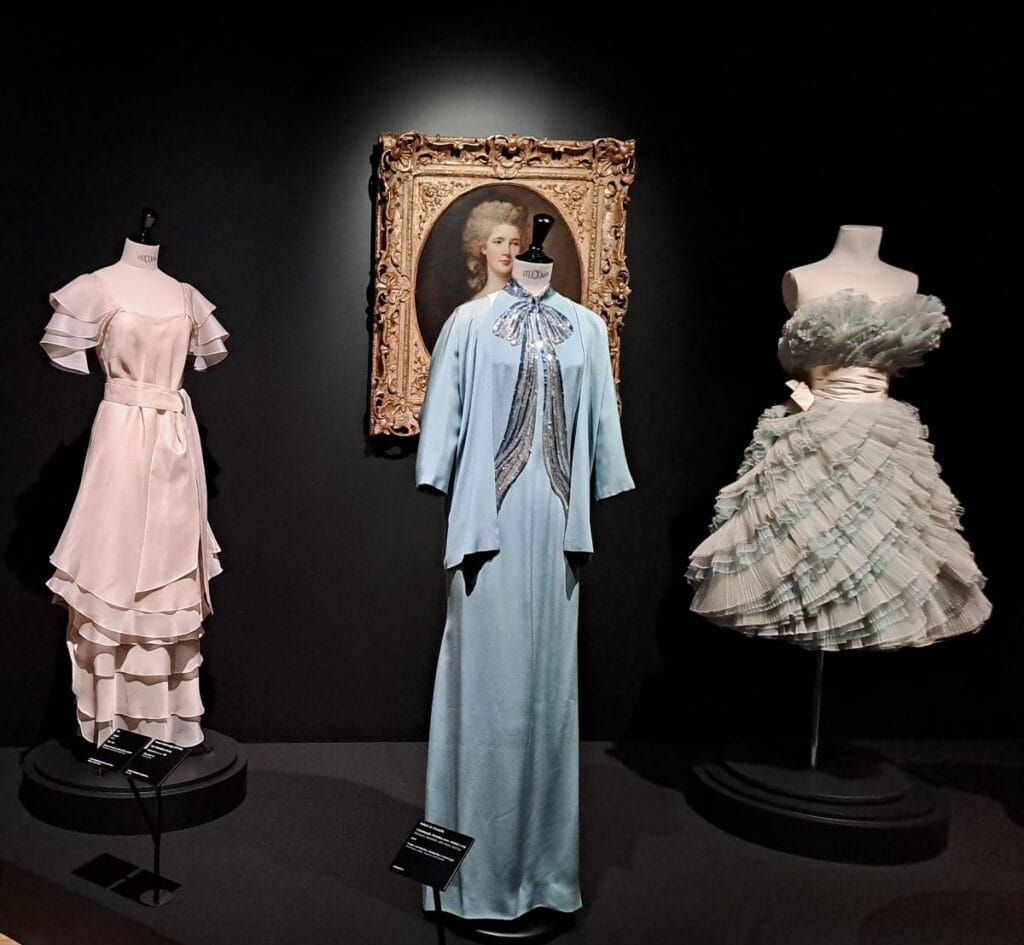
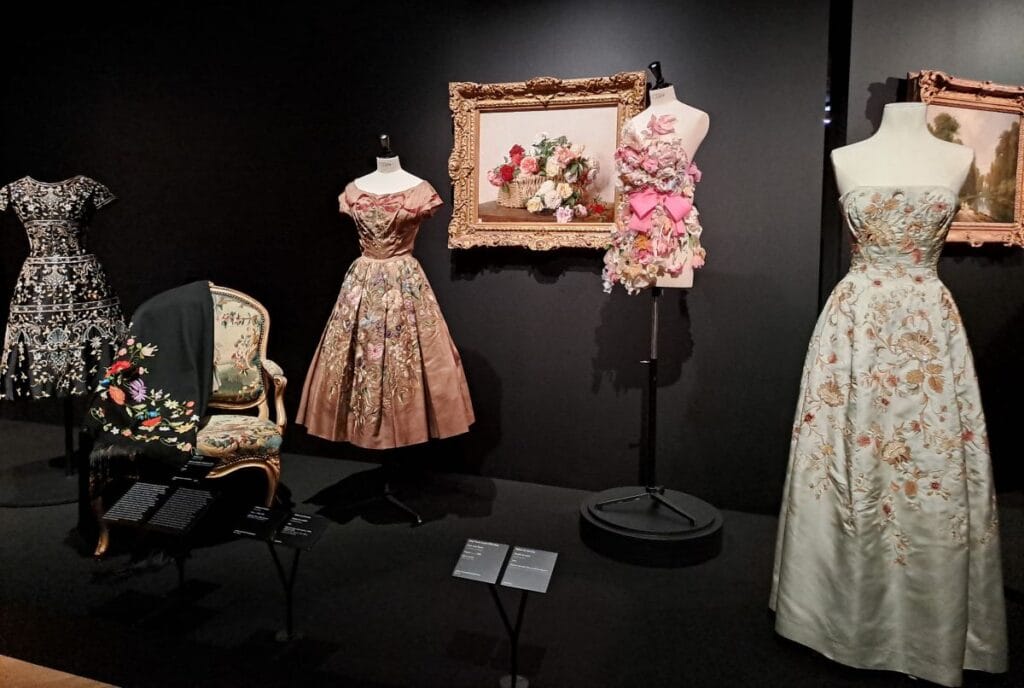
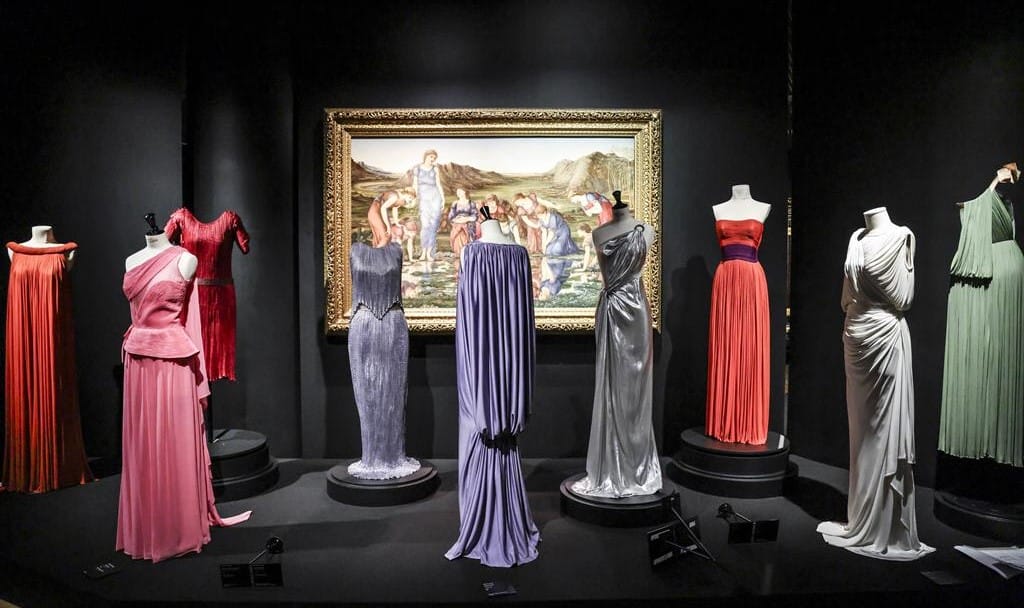
On the right, a dress by Elsa Schiaparelli. On the left, a French-style dress, reminiscent of the era of Marie Antoinette. Painting ‘Portrait of Madame La Porte’ (1752), by Jean-Marc Nattier. On the right, a dress by Charles Frederick Worth. In the centre, an ensemble comprising a bolero and a skirt in silk, lace and embroidery, by John Galliano. On the left, the ‘Adieu’ dress, with a structured bodice and a layered tulle skirt, by Storytailors. ‘Portrait of Mrs Lowndes-Stone’ by Thomas Gainsborough (1775). A Vivienne Westwood dress made of silk, silk satin, tulle, cotton and rhinestonesFrench dressOn the right, a dress by Pierre Balmain. In the centre, a dress by Hubert de Givenchy. The painting ‘Miss Philadelphia Rowley’ by Thomas Gainsborough (1783). Both dresses with boleros are by Jan Taminiau, from the 2012 Tarnished Beauty collection. The marble bust, ‘Hermes of the Vestal Tucia’, by Antonio Canova, and the painting ‘Landscape in a Park’, by Eugène-Louis Lami. On the right, a silk faille dress with embroidery and sequins by Christian Dior (1954). A cocktail dress with floral motifs by Hubert de Givenchy. The painting ‘Basket of Roses’ by Henri Fantin-Latour. Pieces that transport us to the world of the goddesses of the Hellenic world. Lilac dress by Pedro Rodrigues. Painting ‘The Mirror of Venus’ by Edward Burne-Jones (1875).
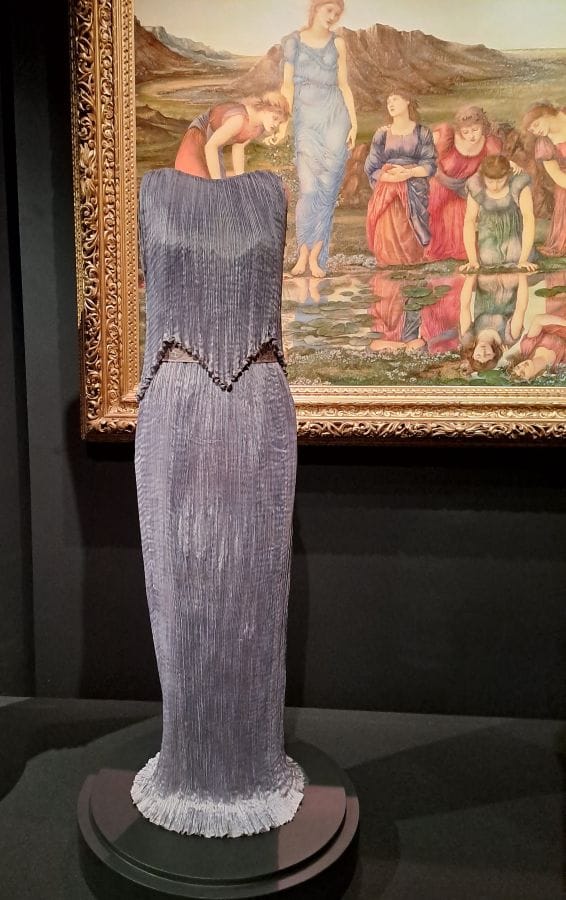
Detail of the ‘Delphos’ dress, in silk and glass paste, by Mariano Fortuny (1909)
We use cookies on our website to give you the most relevant experience by remembering your preferences and repeated visits. By clicking “Accept”, you consent to the use of all the cookies.
This website uses cookies to improve your experience while you navigate through the website. Out of these, the cookies that are categorized as necessary are stored on your browser as they are essential for the working of basic functionalities of the website. We also use third-party cookies that help us analyze and understand how you use this website. These cookies will be stored in your browser only with your consent. You also have the option to opt-out of these cookies. But opting out of some of these cookies may affect your browsing experience.
Necessary cookies are absolutely essential for the website to function properly. This category only includes cookies that ensure basic functionalities and security features of the website. These cookies do not store any personal information.
Any cookies that may not be particularly necessary for the website to function and are used specifically to collect user personal data via analytics or other embedded contents are termed as non-necessary cookies.
Analytical cookies are used to understand how visitors interact with the website. These cookies help provide information on metrics such as the number of visitors, bounce rate, traffic source, etc.