

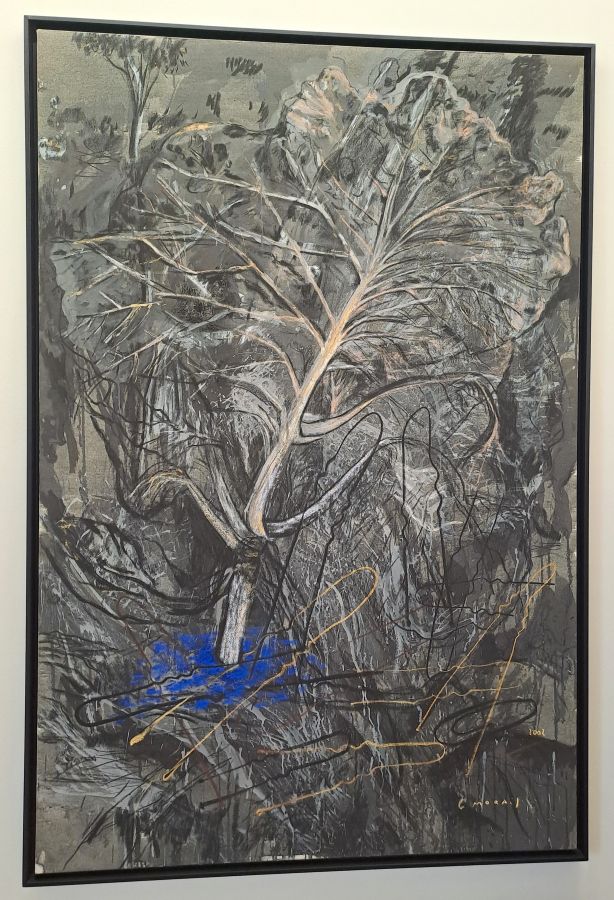
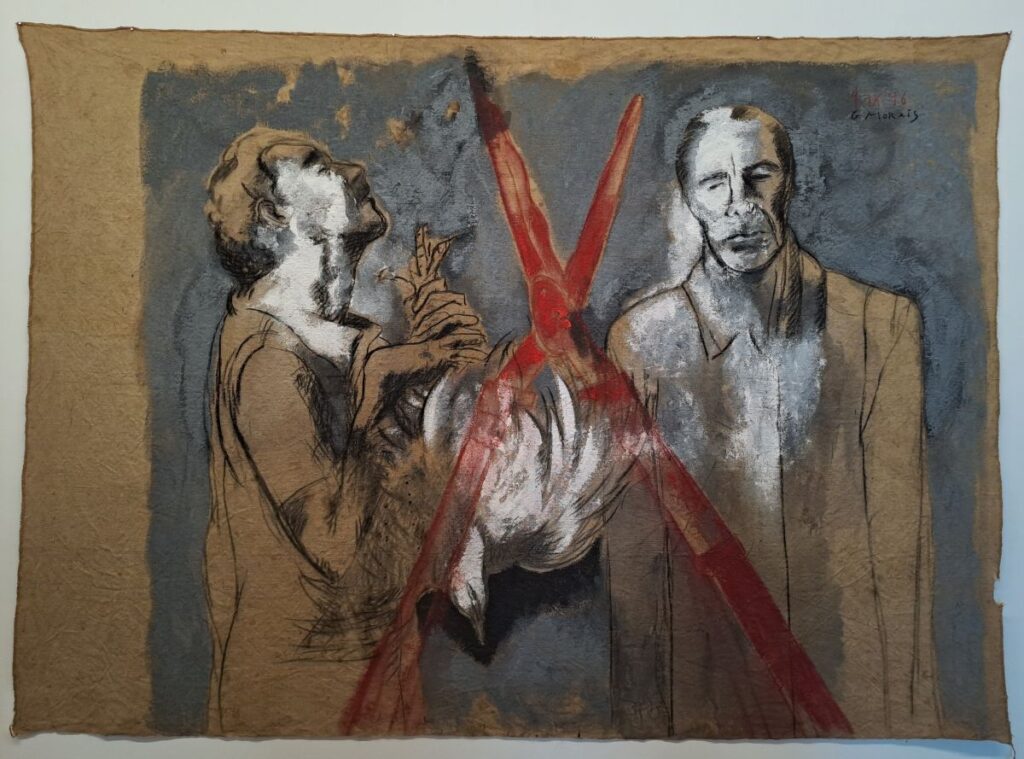
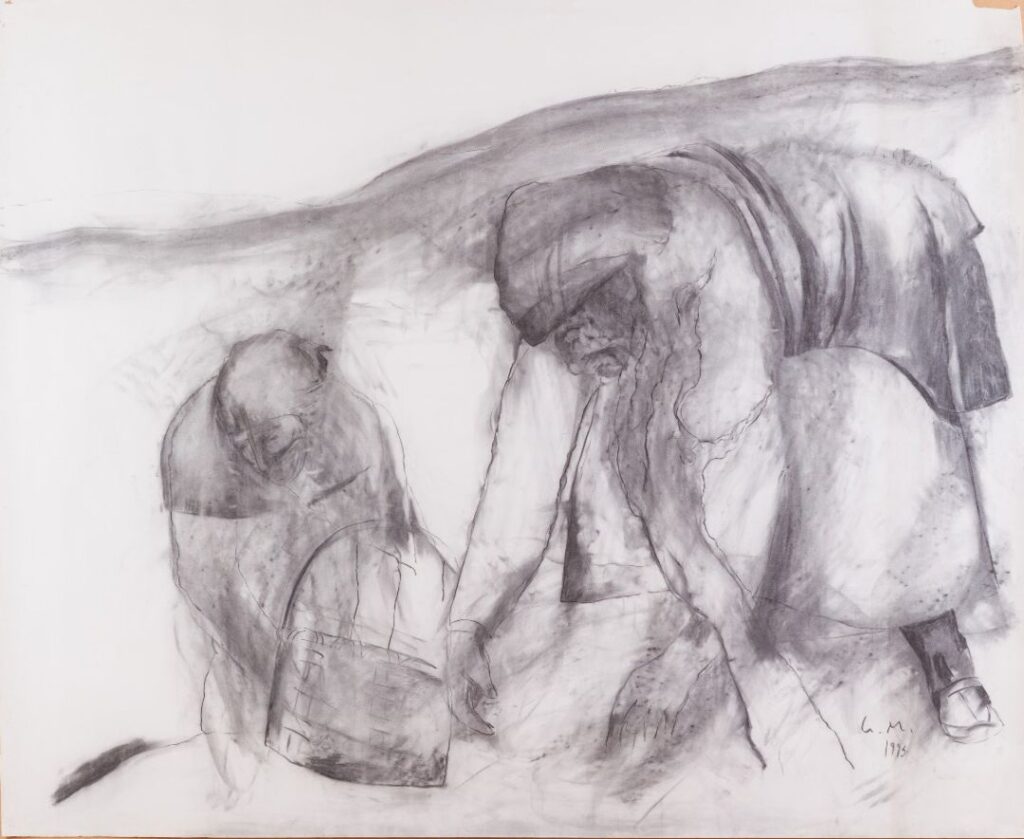
The exhibition ‘Graça Morais – An Anthology’ at the Angels Palace, which the Club visited in early May, explores key themes in Graça Morais’s work from the 1970s to the present day, bringing together over 170 works spanning drawing, painting and photography.
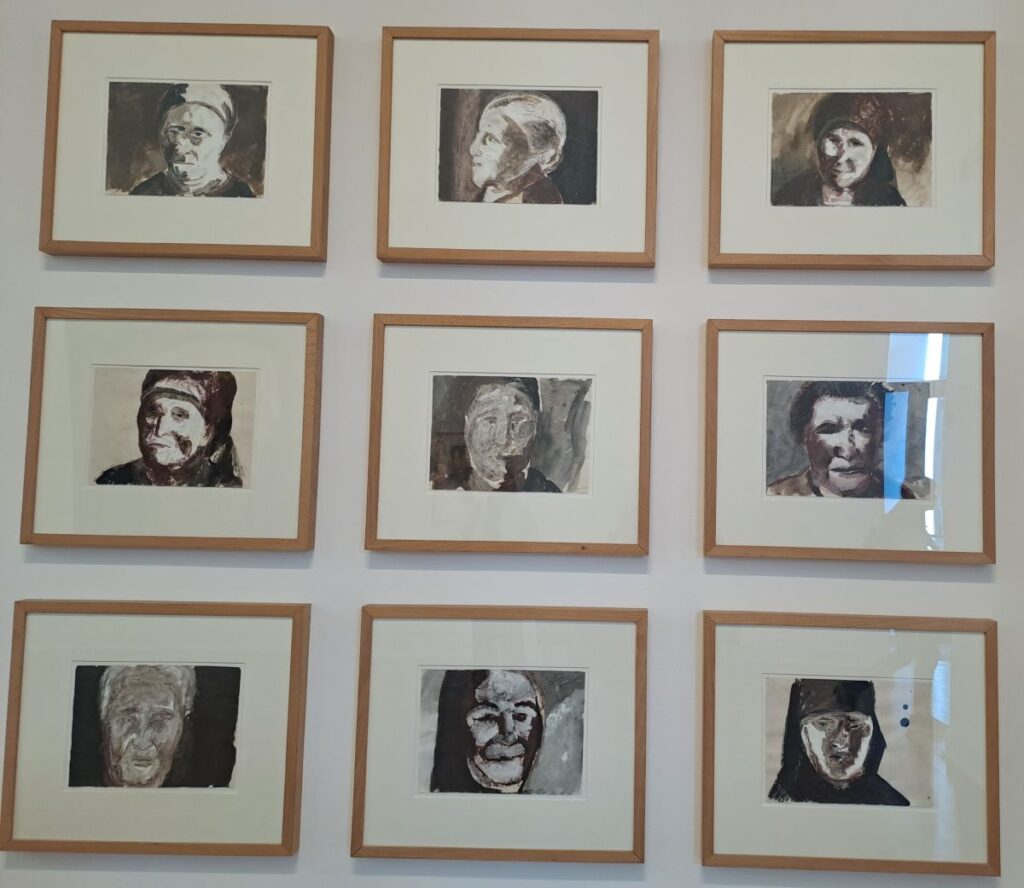
The following paintings depict the people and memories of Vieiro, where she lived, evoked through shades of black, brown and ochre, and the incorporation of olive leaves. This is her most familiar world, featuring paintings of domestic servants, always scrutinising their faces and their silent language.
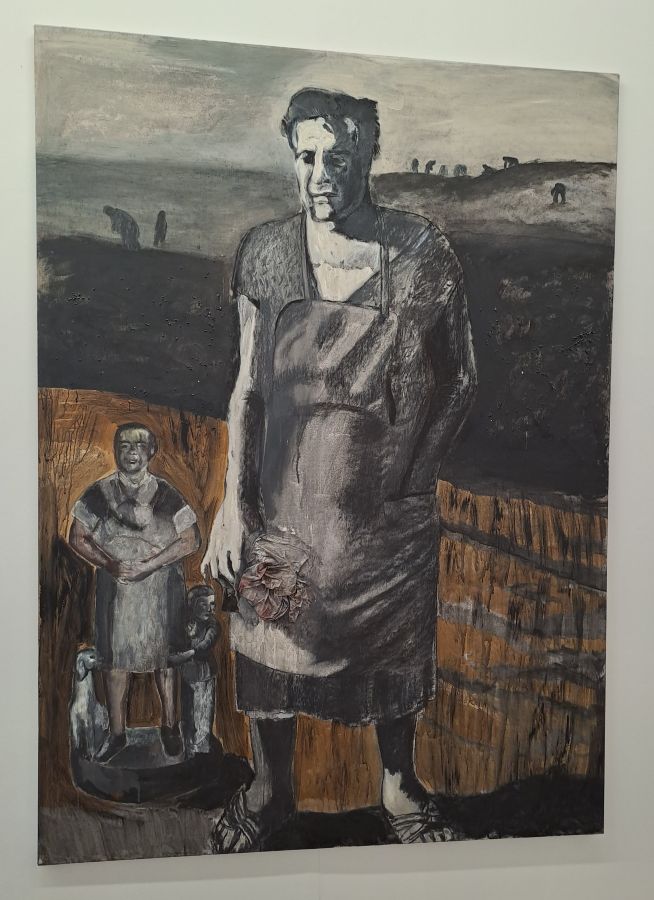
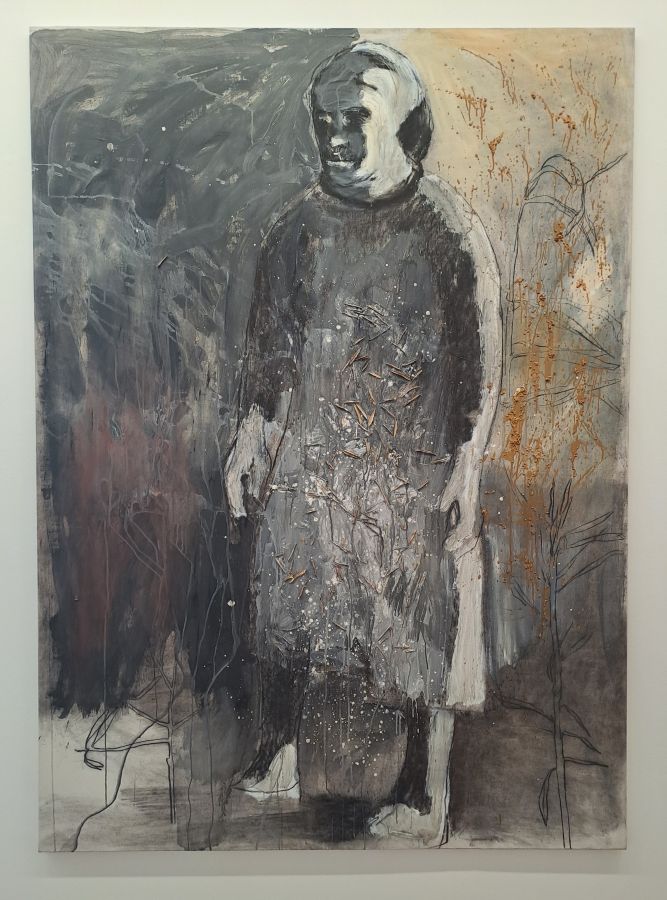
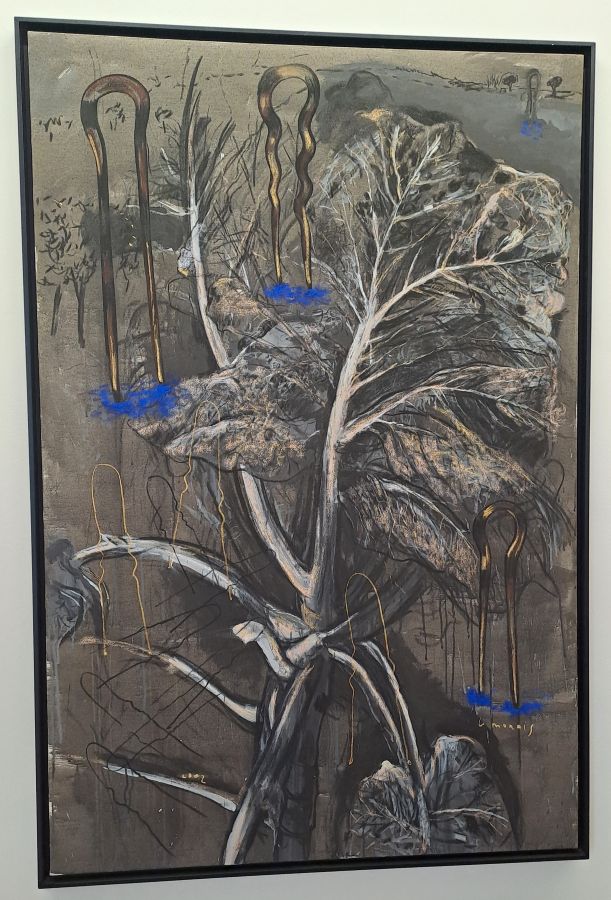
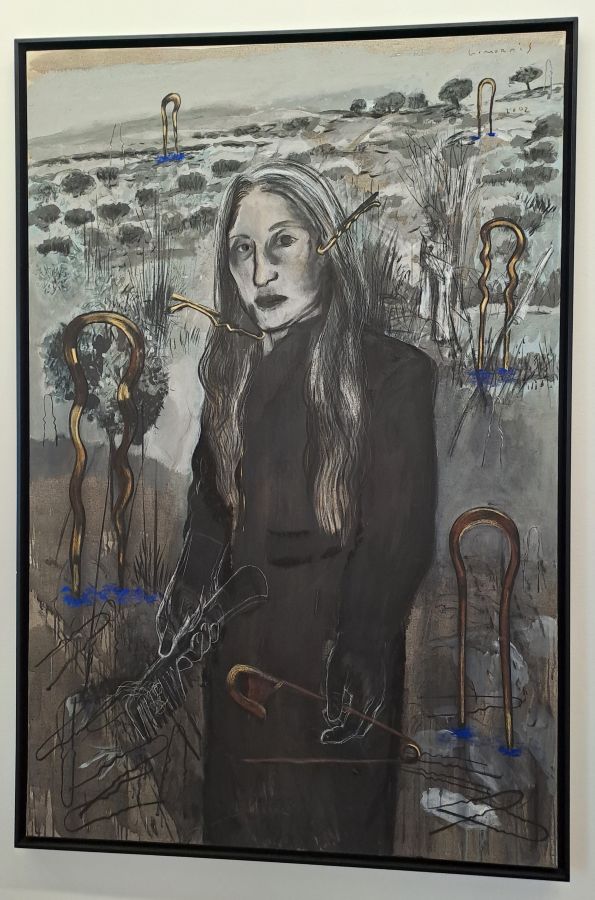
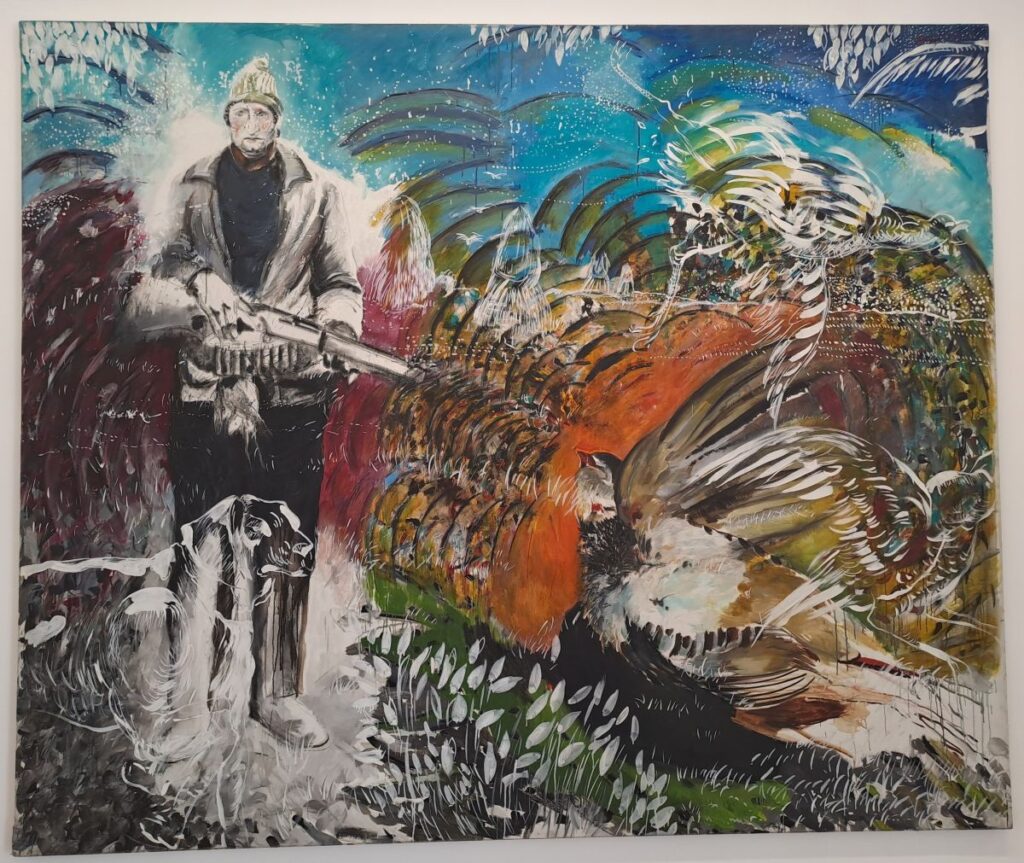
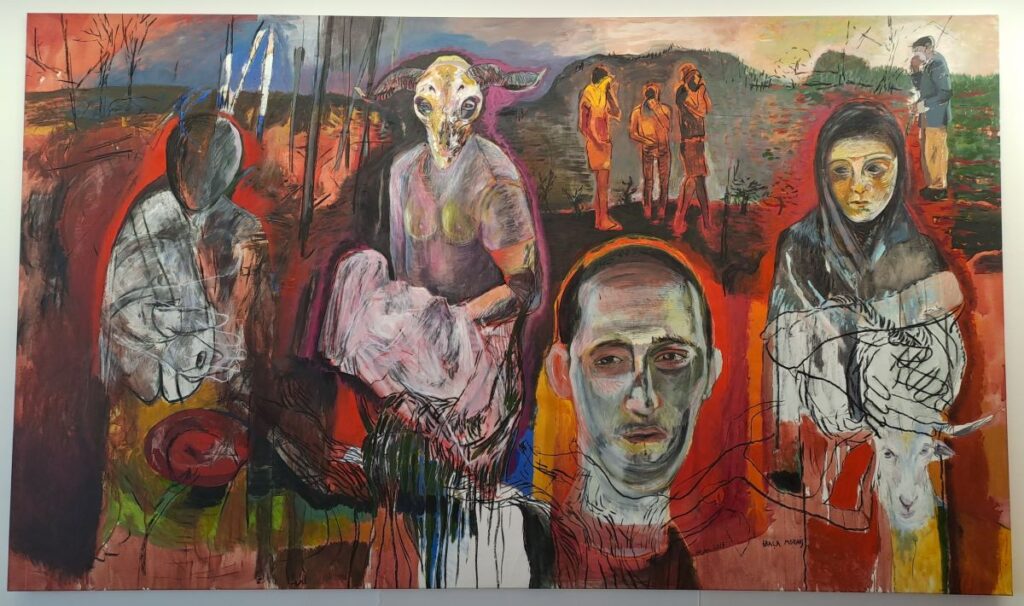
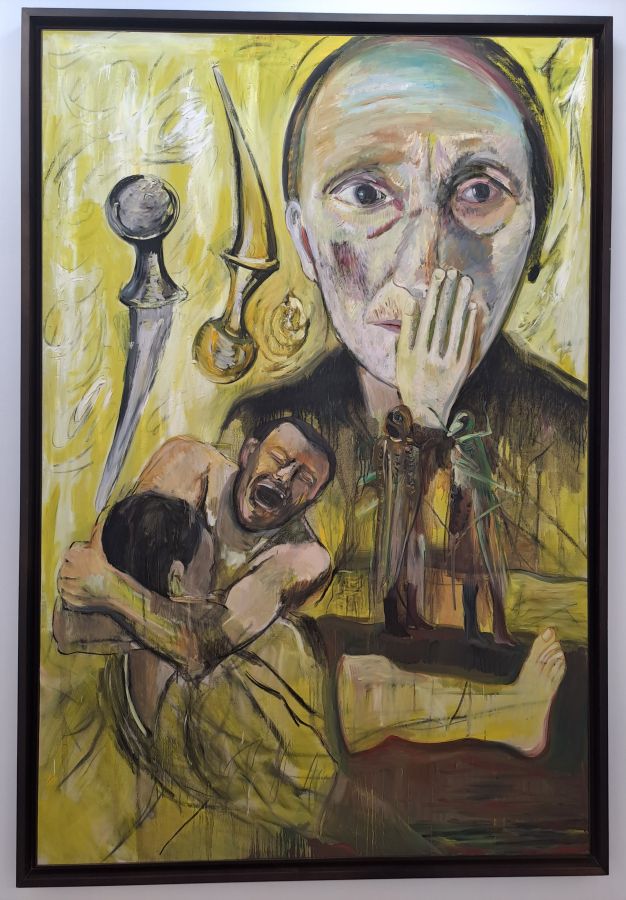
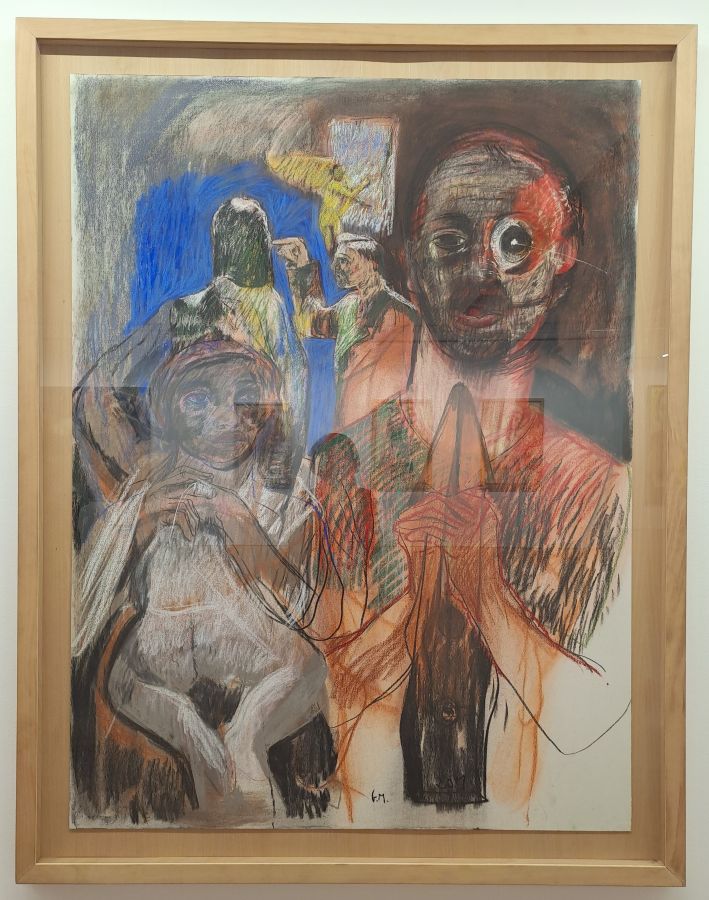
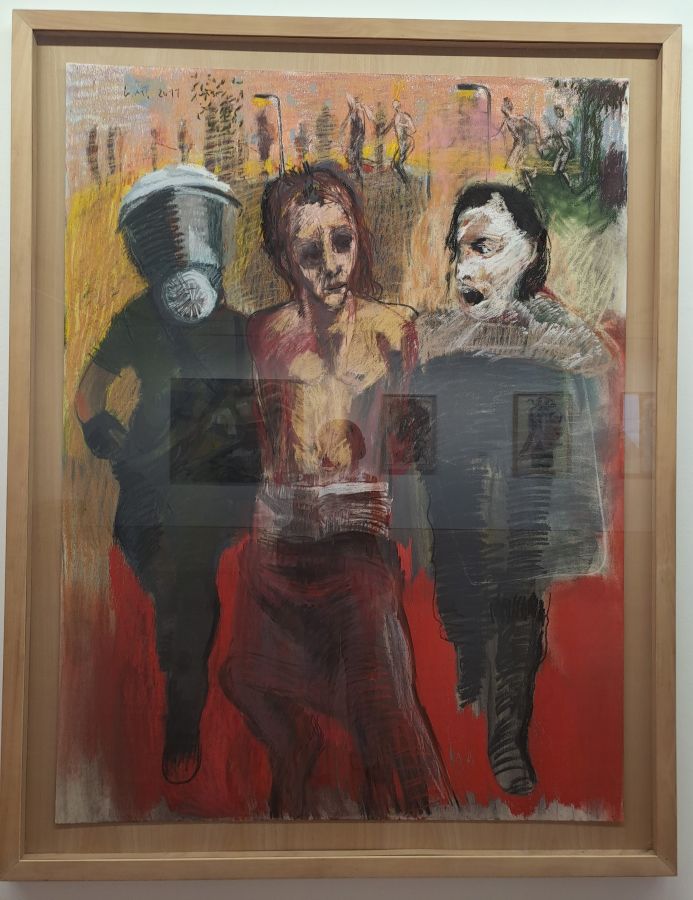
Below are three drawings from the series The Walk of Fear, produced in 2011 and characterised by the use of charcoal and pastel. The drawings were created in response to photographs published in newspapers and magazines. Created against a backdrop of reflection on violence and instability, the series addresses themes such as suffering, chaos, fear and the flight of human beings – hungry nomads – in the face of war and terrorism.
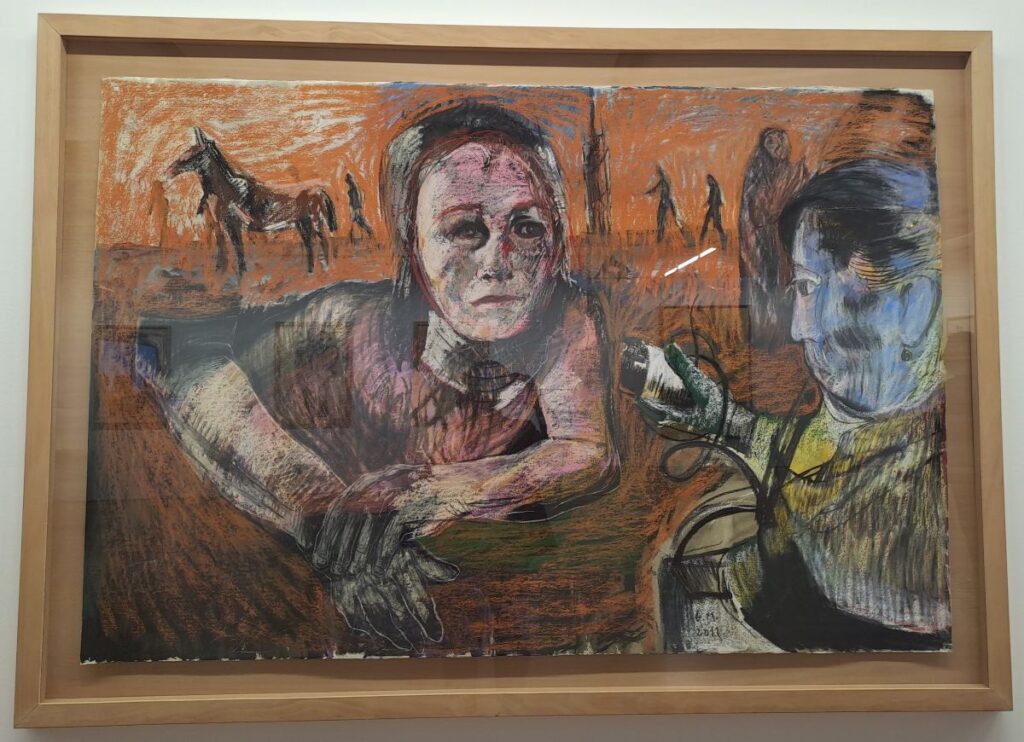
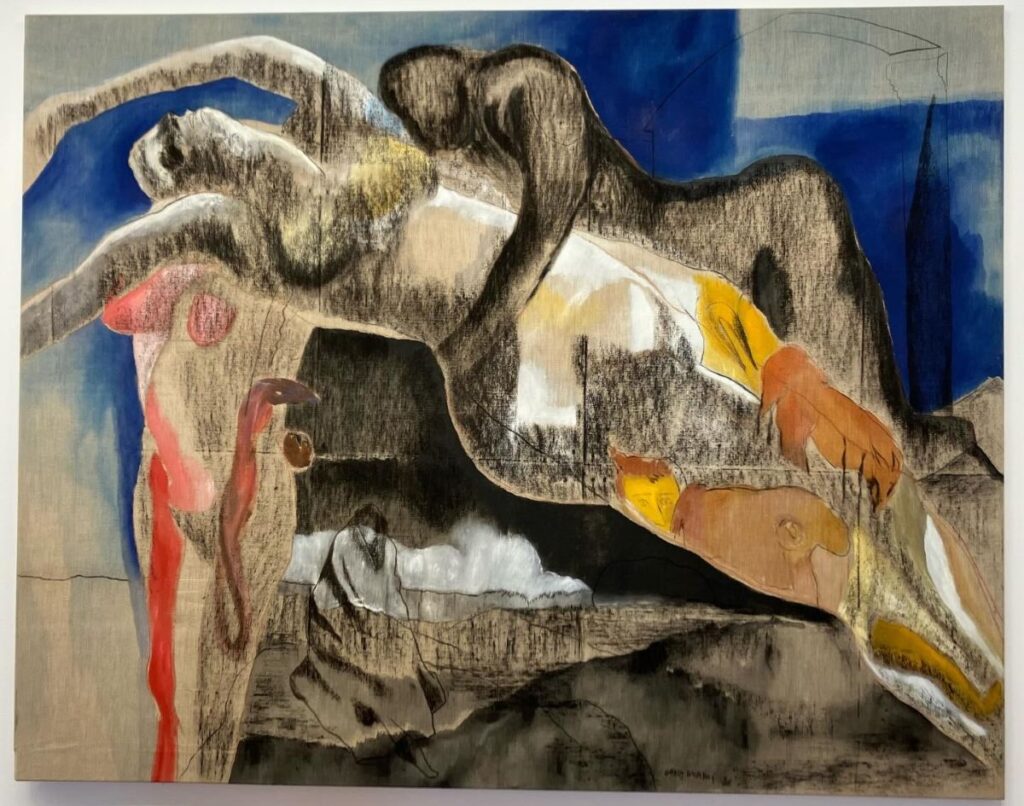
Above, Pietà, 1986. The male figure clutches the fainted female figure in a rapture. A third, naked female body, the figure of the serpent, with the apple beside her, lies upon one of the female figures. Eve and original sin, eroticised bodies, the passions of body and spirit, the mysteries of life and death, of the sacred and the profane – all converge in this work.
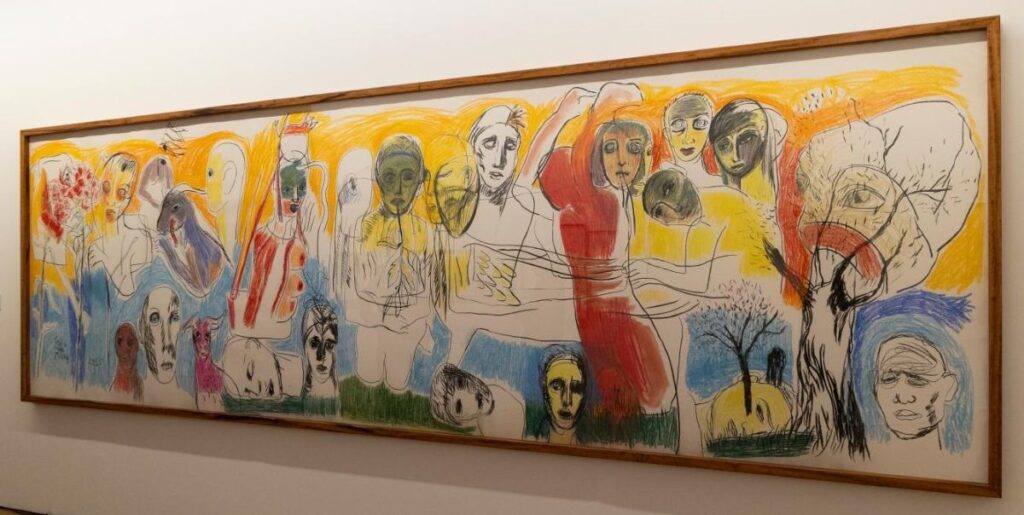
The reproduction of the panel is currently being produced at the Viúva Lamego Portuguese tile factory; it will measure 6 by 20 metres and has already been signed by the artist.